Digital History and Technology: Digital Tools and Accessibility

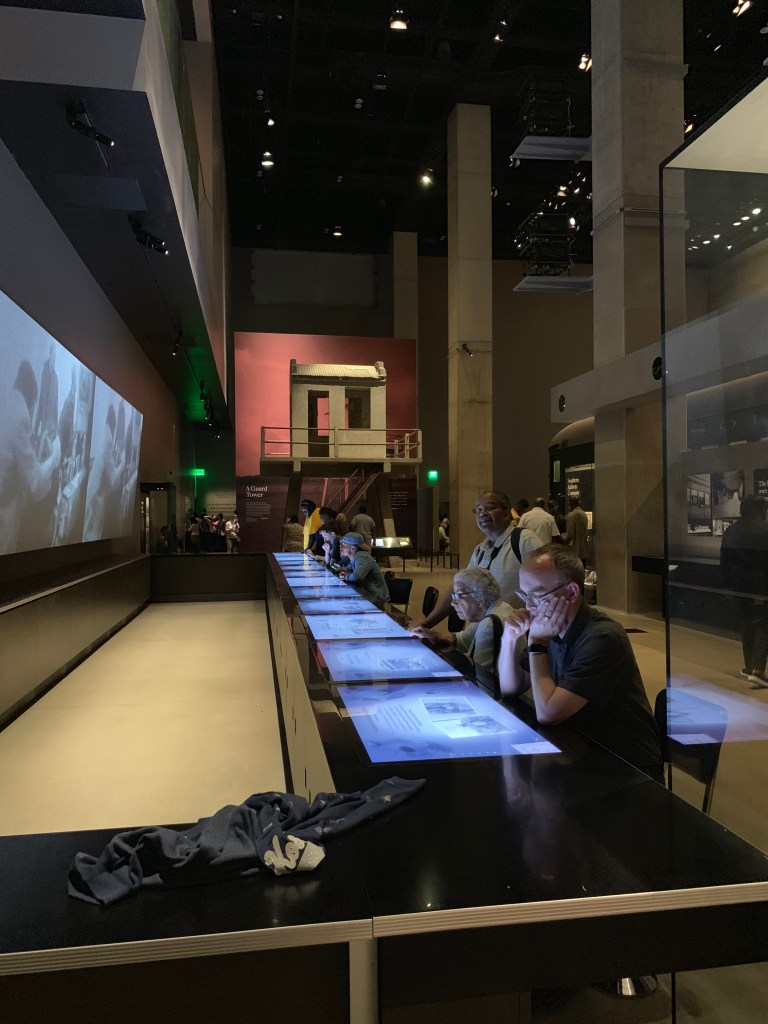
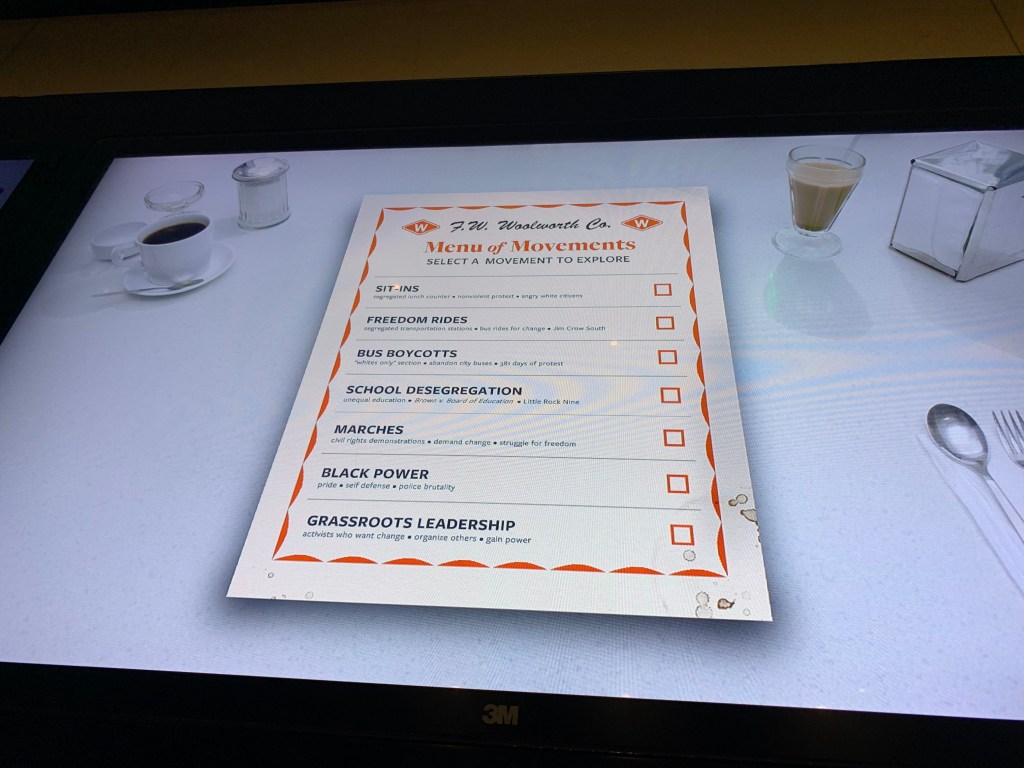
Learning history through digital tools at the National Museum of African American History and Culture. (Photo taken by author, June 2019.)
Visitors sit as if they were at a diner, and explore Civil Rights history using creative and engaging software. (Photo taken by author, June 2019.)

In The Inclusive Historian’s Handbook, Sheila A. Brennan defines digital history as “an approach to researching and interpreting the past that relies on computer and communication technologies to help gather, quantify, interpret, and share historical materials and narratives” (p. 1). Technology can open new doors in analyzing patterns in our data and give us new ways to visualize those patterns. Technology makes it easier and more convenient for historians to work on collaborative projects and to reach a larger audience. According to Brennan, the most important benefit of using digital tools is that we can “access and share marginalized or silenced voices and … incorporate them into our work in ways not possible in print or the space of an exhibition gallery” (p. 1). This statement holds important meaning for me: in anthropology, making sure that multiple voices and perspectives are heard, especially by marginalized groups, is an integral part of research design.

One example of digital tools helping underrepresented voices to be heard is through the Digital Library of the Caribbean, on online collaborative research project that combines resources from multiple organizations to promote the study of Caribbean history and culture. The project was created to serve an international and multi-lingual audience, with all materials available in English, Spanish, and French. Monetary and professional resources are distributed equitably across more than forty collaborating institutions. It is evident from projects like these that digital spaces can often provide a better and unlimited way to preserve and share history than physical spaces can. However, Brennan admits that digital history methods can be exclusive and challenging to practice.

Andrew Hurley states in his article Chasing the Frontiers of Digital Technology: Public History Meets the Digital Divide that “riding the fast-moving digital bandwagon is not without its risks and costs” (p. 70). From the high costs of software and hardware to new training for humanities scholars, much extra time and money must be invested in order to operate successfully in “the new media” environment. The time and funding to do this might not be available to smaller institutions or groups. It is also important to remember that people’s access to digital tools and information may vary greatly based on socioeconomic status: this has been termed “the digital divide” (pp. 70-71). Low-income, inner-city populations are often unable to fully engage with digital media and technology.

Hurley describes the creation of the Virtual City Project in 1999, a collaborative online project through UMSL where users may access 3-D imaging and mapping technologies (such as Google Earth) to create electronic representations of lost St. Louis historic landscapes, such as the Lucas Place and Riverfront neighborhoods. Users can also create their own 3-D cities and link both text and images to landscape features. Project designers hoped that it would be well-utilized by North St. Louis residents in the featured neighborhoods, but the “digital divide” became apparent: the website and blog were effective in marketing the neighborhoods to outside audiences, but less useful for outreach within them. Many North City homes did not have computers or Internet access. Even with a computer, accessing the project’s software was not user-friendly to those without more advanced technological skills. Old-fashioned outreach methods such as distributing flyers and hosting community outreach events were able to publicize the project more effectively.

In the case of making oral histories more accessible, author Michael Frisch writes in his chapter of Letting Go? Sharing Historical Authority in a User-Generated World that he believes digital tools can “liberate oral history from constraints that until recently have, paradoxically, rendered the recordings that define the method largely unreachable and underutilized in all but a few corners of documentary and public history practice” (p. 126). Frisch explains the concept of “shared authority” in public history: it is an interpretive and meaning-making process between historians and a larger public audience (p. 127). Frisch’s “digital kitchen” begins with “raw” source materials such as transcribed oral histories and is transformed by scholars, curators, and other specialists into a “well-cooked, receivable presentation” fed to the public (pp. 129-130). However, not every “cook” may interpret raw materials for public presentation (such as exhibits) in the same way, and this is where problems arise. Frisch’s idea is to make the raw materials accessible to the public in a user-friendly way, so that everyone can play the role of cook in interpreting the information themselves. This may not be a simple task, but I believe it would be a step in the right direction.
Introduction

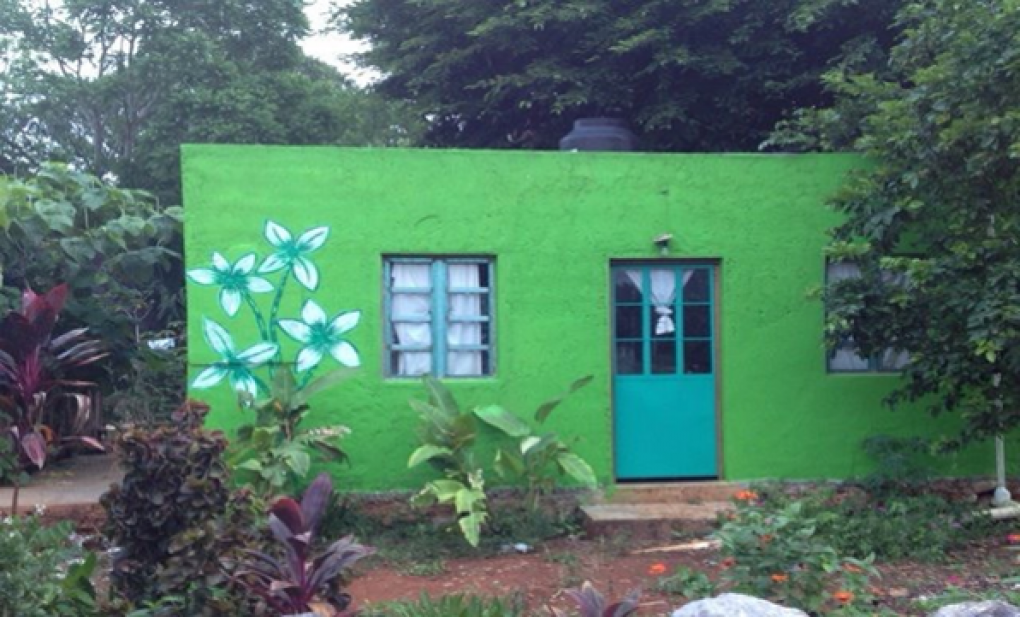
Dona Irma Nueva’s home in Yaxunah, Yucatan, Mexico after we repainted it and added the flowers as part of a community service project. (Photo taken by author, June 2012.)

Yaxunah Community Website: https://www.yaxunahmexico.com/

I am presenting this blog as part of a graduate course in museum studies at UMSL: Museums and History in the Digital Age. My name is Taryn Pelch, and I have worked in the St. Louis area as an anthropology professor for ten years. I have either been in college or taught college since 1995… I currently teach at Lindenwood University in St. Charles and at SIUE in Edwardsville. I have much experience in collections management and hope to snag a position at an anthropology museum. I worked for three years as a volunteer/student research assistant at the Missouri Botanical Garden Herbarium, curating and databasing their historic maize (corn) collection. I am planning, at some point, to pursue a doctorate in anthropology, going back to my roots as a bioarchaeologist. I want to continue teaching, as it’s something I find truly rewarding. I would love to return to Belize and Mexico to continue working with the Maya communities there.

At the moment, I am assisting my friend and former chair Dr. Cory Willmott with her Voices in Wood Project Virtual Museum exhibit as through the SIUE Museum. This will also be my exit project/internship for my graduate program at UMSL. We hope to have the public website up and running soon! This semester, I hope to learn more about local history and how to effectively engage the public using digital media. I would really like to learn more about designing blogs and creating websites, especially since my internship will pertain to these topics.

Two Exhibit Reviews and Comparisons

I had never given much thought to digital exhibits until this past semester, when the coronavirus pandemic led to mass-closings of museums across the globe. Due to this and my digital history course, I began to understand the importance of digital technology and online exhibits in this day and age. While all local museums have been closed since March, it was still possible to look at exhibits online. Last June, I visited the Smithsonian’s National Museum of the American Indian (NMAI) and National Museum of African American History & Culture (NMAAHC), both in Washington, D.C. By far, these museums were the most amazing historical and cultural institutions I had ever visited. I had tears in my eyes through most of my day-long tour through the NMAAHC, the exhibits were so incredibly and thoughtfully created. I listened as returning visitors guided their families through the exhibits as volunteer tour guides, taking so much pride in teaching their history to others. Because of my amazing experiences at both institutions, I decided to compare two exhibits, one from each institution. I will also note how each online exhibit component differs from its physical counterpart in the museum.

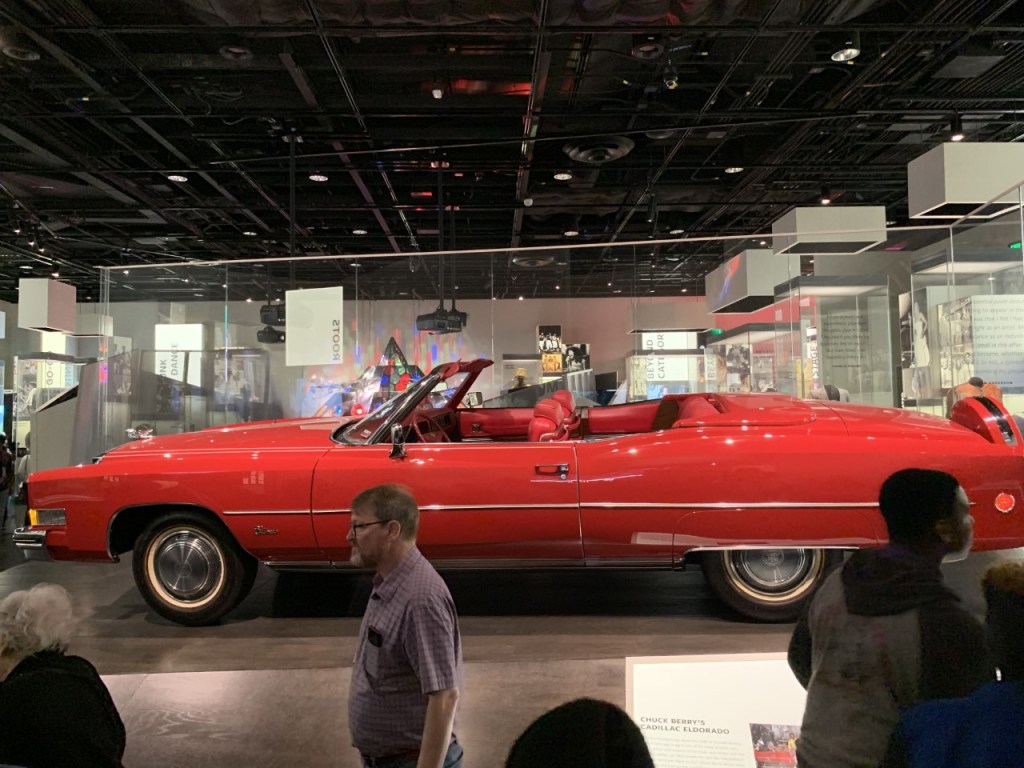
Chuck Berry’s famous red Cadillac, featured at the Musical Crossroads exhibit at NMAAHC. Photo taken by author, 2019.

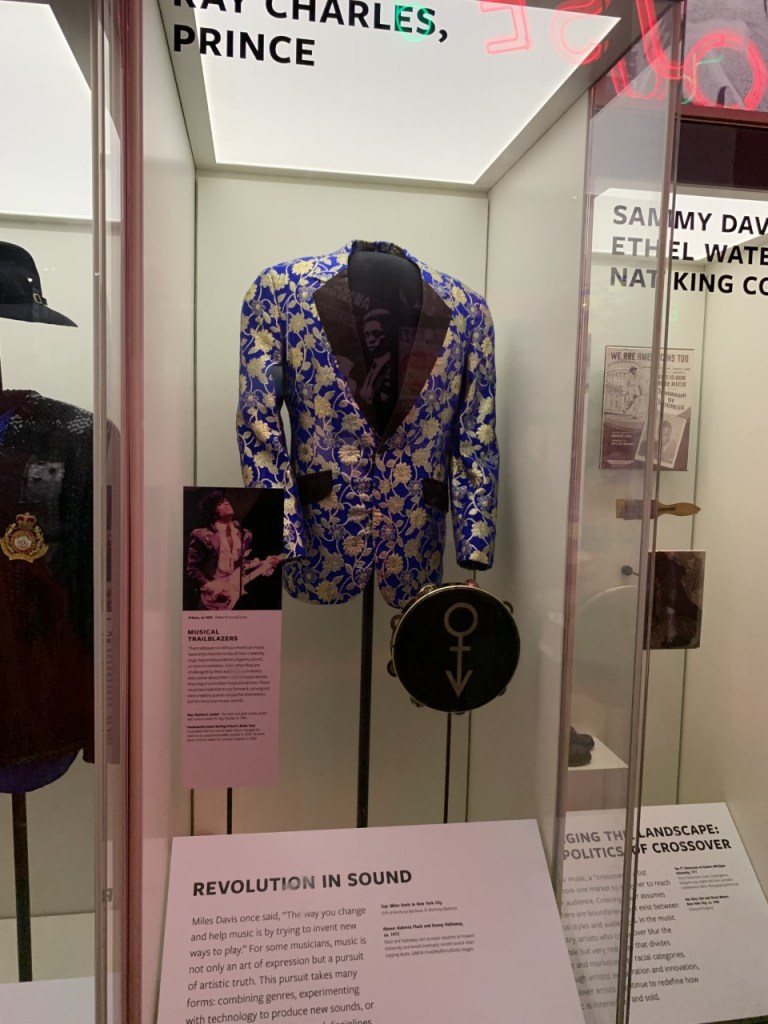
My favorite exhibit at the NMAAHC was Musical Crossroads, which is one of the most popular exhibits at the museum. Upon entering the gallery, one is immediately overwhelmed because they are standing face to face with Chuck Berry’s red Cadillac convertible, the same vehicle he drove onstage at St. Louis’ Fox Theater during filming for his 1987 documentary, Hail! Hail! Rock and Roll! What an exhibit opener! The exhibit explores the history of African American music of all genres and styles, and focuses on some of the most famous artists. I really enjoyed looking at some of Prince’s costumes, and one of his electric guitars. The exhibit website explains that “African American music provided a voice for liberty, justice and social change. In the exhibition, visitors have the opportunity to appreciate African American music as a vibrant living art form that has been a vehicle of cultural survival and creative expression. Musical Crossroads is the thread that pulls the themes of the Museum’s various galleries together in a language that is accessible to all.” The exhibit’s main messages for visitors is that African American music preserved cultural traditions, is very diverse, plays a central role in the history of American music, and that music in general is a universally-appealing lens that helps us understand American history.

A display at the NMAAHC containing one of Prince’s costumes. Photo taken by author, 2019.

The exhibit is organized into certain themes, including Classical, Music on Stage and Screen, Rock n Roll, and Hip-Hop where objects, exhibit labels, and multimedia displays educate visitors on the artists and their music. A Neighborhood Record Store display is set up like an actual music shop and acts as a communal space for visitors to interact with each other. Museum guests can browse through mock record covers and listen to thousands of songs by accessing a large interactive touch screen table in the center of the display. Unfortunately, the exhibit website only displays images of three objects in the physical exhibit, and online visitors wishing to see other objects must search for them using the “Search the Collection” feature available through the main website’s top navigation bar. Online visitors must perform a website search in order to access features relating to the exhibit, and will be able to access blogs and information on past events pertaining to the exhibit. Ideally, all of these features should be included on the exhibit’s main page, along with links to every object displayed in the physical space, but this has not been done. There are very few photos of the physical exhibit online, which is disappointing.

Curiously, while the NMAAHC was much more detailed and impressive as a physical space, it is exactly the opposite at the NMAI: their online presence is more impressive and detailed than the physical space. While the NMAI building is quite impressive, I don’t recommend the stairs for anyone with vertigo! After almost falling a few times, I became a “frequent flyer” on the elevator. There is much empty space in the NMAI building as opposed to the NMAAHC, and I’m uncertain why so much space is not utilized at the NMAI since their collections of Native American objects are among the largest in the world. I was able to tour the NMAI in about two hours, while the NMAAHC took me seven hours.

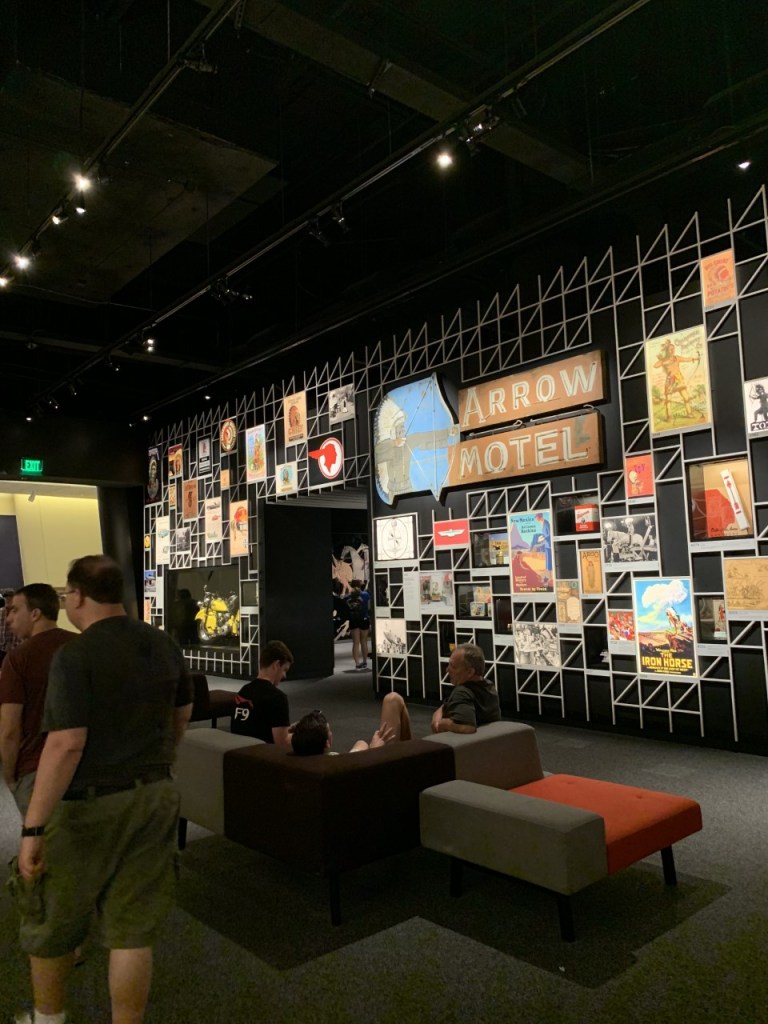
Part of the Americans exhibit at the NMAI. Photo taken by author, 2019.

One of the largest exhibits at the NMAI, Americans, explains how images, names, and stories of American Indians infuse American history and everyday life. The exhibit discusses popular images in advertising and media like the Land O’Lakes butter maiden and the Cleveland Indians’ mascot along with characters from classic Westerns and cartoons to episodes of Seinfeld and South Park. There are detailed displays about popular people and events that most Americans likely know something about: the story of Pocahontas, Thanksgiving, the Trail of Tears, and the Battle of Little Bighorn. The physical exhibit is impressive, spanning different gallery spaces and incorporating thousands of objects into various displays. Large interactive touch screens make the experience even more interesting and engaging, as visitors can search for detailed information on each object in the exhibit. The exhibit website includes a link to a TED talk where NMAI Director Kevin Gover discusses some of the main exhibit themes.

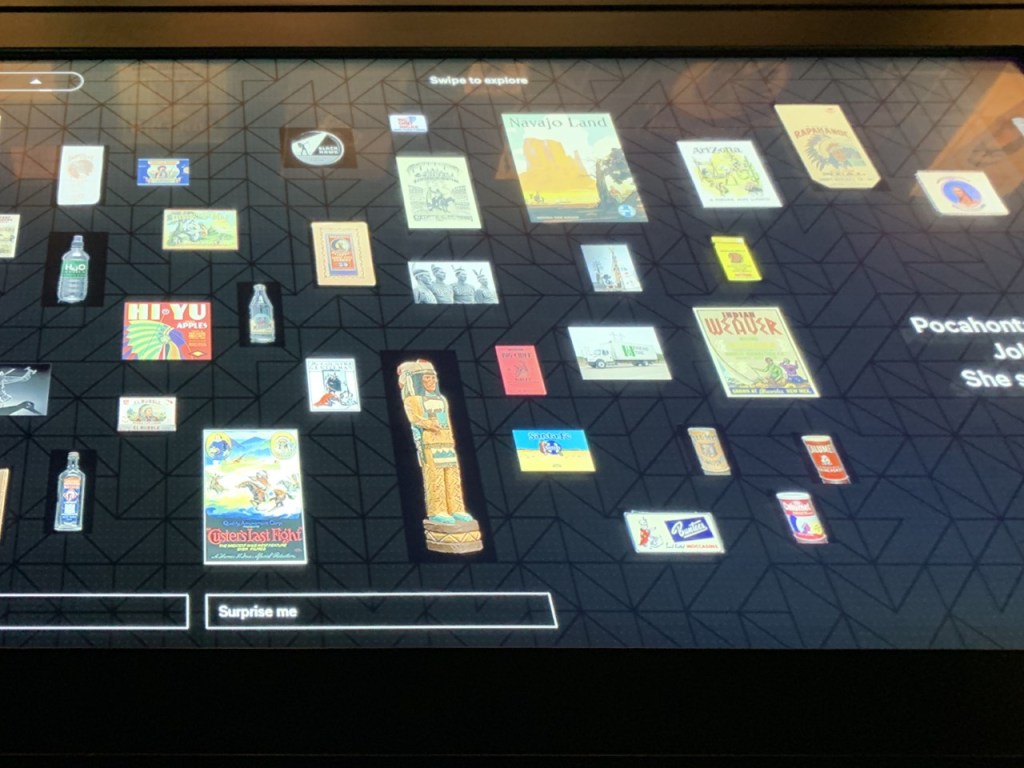
One of the large interactive touch screen displays at the NMAI where visitors may discover information on every object in the Americans exhibit. Photo taken by author, 2019.

The exhibit website is interactive and very well done. Visitors can click and drag the screen on the main page to access hundreds of objects displayed in the physical exhibit. I noticed that the interactive touch screen display at the physical museum and the interactive feature on the exhibit website are almost exactly the same, which is great for those who are unable to visit the museum in person. When visitors click on an object online or select one on the museum touch screen, a larger image, description, and provenance information appears. One can easily click back out of the object detail screen back to the exhibit website’s main page or the main touch screen at the museum. Visitors can also find links to videos and detailed articles on exhibit themes as they are exploring the website’s main page. At the bottom of the page are four titles where viewers can click to access more information on main displays and themes: The Invention of Thanksgiving, Queen of America, The Removal Act, and The Indians Win. One critique is that no photos are available of the museum displays or the physical exhibit.

Comparing the physical spaces of the NMAI and the NMAAHC, both are impressive buildings with colorful, detailed, and interactive exhibits. The NMAAHC is a larger building, has ten times the exhibits, and in my opinion, is a much more fulfilling and informative experience. I was disappointed that the NMAI had so few exhibits. As for an online experience, the NMAI’s website is far superior to the NMAAHC’s website, with better-designed exhibit pages and a more detailed, interactive experience. It is easy to access photos of an exhibit’s objects at the NMAI, while one must search the collections to find them at the NMAAHC. Also, all digital features pertaining to exhibits are easily-accessed from a main page at the NMAI, while users must hunt for them through a website search at the NMAAHC. At both museums, it is unfortunate that there are few photos of the physical exhibits and museum displays, and no virtual walkthroughs, unlike other museum websites I’ve visited. As an example, The Metropolitan Museum of Art’s website has a 360° Project feature where online visitors may take a “virtual walkthrough” of select museum locations. In the future, especially in light of this pandemic and the increasing importance of virtual museum exhibits and digital content, I am hopeful that more museums will follow NMAI’s example and include thorough digital exhibits so that online visitors may experience museums in a richer way, especially if the physical locations are closed.

Reflections on Spring Semester 2020

This semester was definitely the most difficult one I’ve ever faced, and I’m sure that many other students feel the same way. My graduate course and internship, along with the courses I taught, were all switched to an online format in a very short period of time. Now, more than ever, I appreciate the modern digital tools and technologies that got me through this crisis. Through online platforms like Canvas and Blackboard, I was able to deliver course content and communicate with my students. Through email, I was able to communicate with my mentor and professor. Utilizing digital library databases and Google Scholar, I was able to locate sources for my term papers. We are lucky that this pandemic occurred during the digital age, as it was still possible for us to learn, teach, and communicate effectively.

My Museums and Public History in the Digital Age graduate course was particularly relevant, as museums have only been accessible online since mid-March. As they slowly reopen, visitor numbers will likely not be as high as they were pre-pandemic. Learning how to post in the Clio digital history platform was very interesting, as it helped us to to explore local landmarks important to St. Louis history. Created by David Trowbridge of Marshall University, the Clio website and mobile app are free, and use GPS to share local knowledge about historic and cultural sites around the U.S. Individuals and educational institutions contributed to Clio’s 30,000+ entries and over 200 walking tours across the country featuring historical and cultural landmarks, monuments, and museums. Each entry contains a short introduction to the site and its history, with images, media, and links where visitors can find more information. We also learned how social media can be a powerful tool in encouraging conversation and promoting public history.

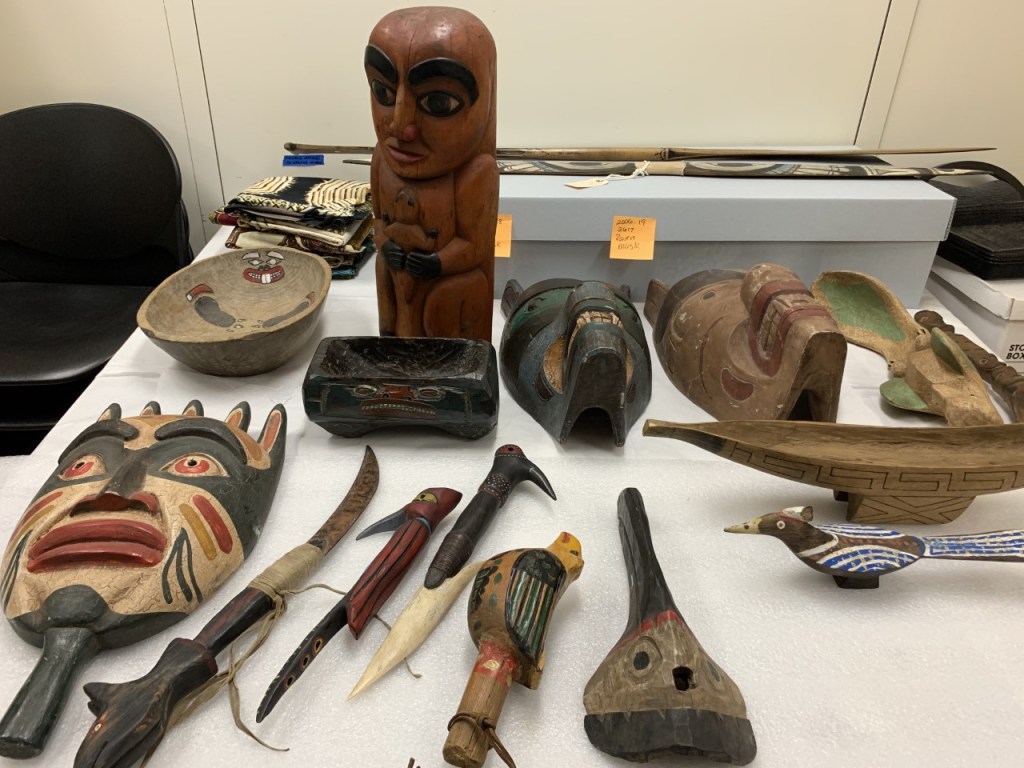
While I have not learned the ins and outs of Omeka yet, I look forward to creating an Omeka site for my project through the Southern Illinois University at Edwardsville’s University Museum. All semester, I have worked to update Excel spreadsheets and transcribe digital video interviews for the Voices in Wood project, which will feature 57 wooden bowls, masks, and other cultural items from the museum’s collection along with the perspectives of three project consultants. Visitors to the digital exhibit will be able to explore the items and contrasting ideas on their authenticity, use, age, and cultural affiliation. Our two First Nations consultants generally believed that the items were authentic Native-made pieces from the Pacific Northwest Coast, but our guest museum curator consultant believed that most of the items were fakes made in Asia from tropical wood. I will hopefully present a paper on our findings in November at the American Anthropological Association’s (AAA) annual meeting in St. Louis.

Some of the cultural items in the museum’s collection with more questionable provenance information. Photo courtesy of author.

In summary, I have learned that digital tools are a necessary part of the public historian’s and museum specialist’s toolkit. When people cannot visit a museum in person, a digital experience must suffice. As museum professionals, we must do our best to learn digital tools and implement them in our work, making exhibits and information more accessible online than ever before. This fall, I will be teaching online and in hybrid format, and will need to learn how to utilize new digital resources in my classes. I am thankful that we have the technology to help students, including myself, continue learning in a rather insane age.

Facebook as a Digital History Tool

Sarah Elwood and Katharyne Mitchell write in their article Technology, Memory, and Collective Knowing that “social and spatial media, especially interactive online and mobile applications, play an increasing role in everyday lives in many parts of the world, demonstrably altering space, time, memory, and collective knowledge.” I have definitely seen this to be true in my own life! I remember when I first created my Facebook account, back in 2008. It was amazing. I could post digital photos, track down my high school friends and see what they were up to, and reconnect with my grad school classmates. We were able to share photos and posts, making up for lost time. My cousin April, who I hadn’t seen in 15 years, tracked me down and shared some childhood photos of us with our grandmother. Her brother and our other cousin Brady were able to access the photos, and we could all comment on them instantly. What a wonderful way to share family history! My friend Beth and I would sit up all night and play interactive games on Facebook, and we felt connected despite the fact that she was sitting at her computer in New Mexico, with me in St. Louis. With my first iPhone in 2012, I discovered the Facebook mobile app, and it has been the primary way I interact with friends and family ever since. When I was traveling and working in Belize and Mexico in 2012, I was able to post photos as I traveled, instantly sharing them with friends back home. Like Elwood and Mitchell, I now see Facebook as a massive digital history project! Through my timeline, I can actually go back and see what I was doing or thinking years ago.

The main lobby of Black Rodge Lodge near San Ignacio, Belize, where I stayed for two weeks in the summer of 2012. I posted this instantly on Facebook using the Lodge’s wifi, and my friends were able to connect with my adventures.

Since Facebook is so popular, it is a great way to advertise cultural events. Last May, my Practicum course at the University of Missouri, St. Louis created an exhibit called Still We Thrive: The Neighborhoods of Fountain Park, Lewis Place, and The Ville and hosted a reception at The Griot Museum of Black History and Culture in St. Louis. I organized the reception, and located three guest speakers to introduce the exhibit. We advertised on Facebook through The Griot’s website and our individual profiles, and were able to attract 50 guests for our reception within a few days. Not only did we save time, but if we had distributed flyers door to door, we would have reached a much smaller audience.

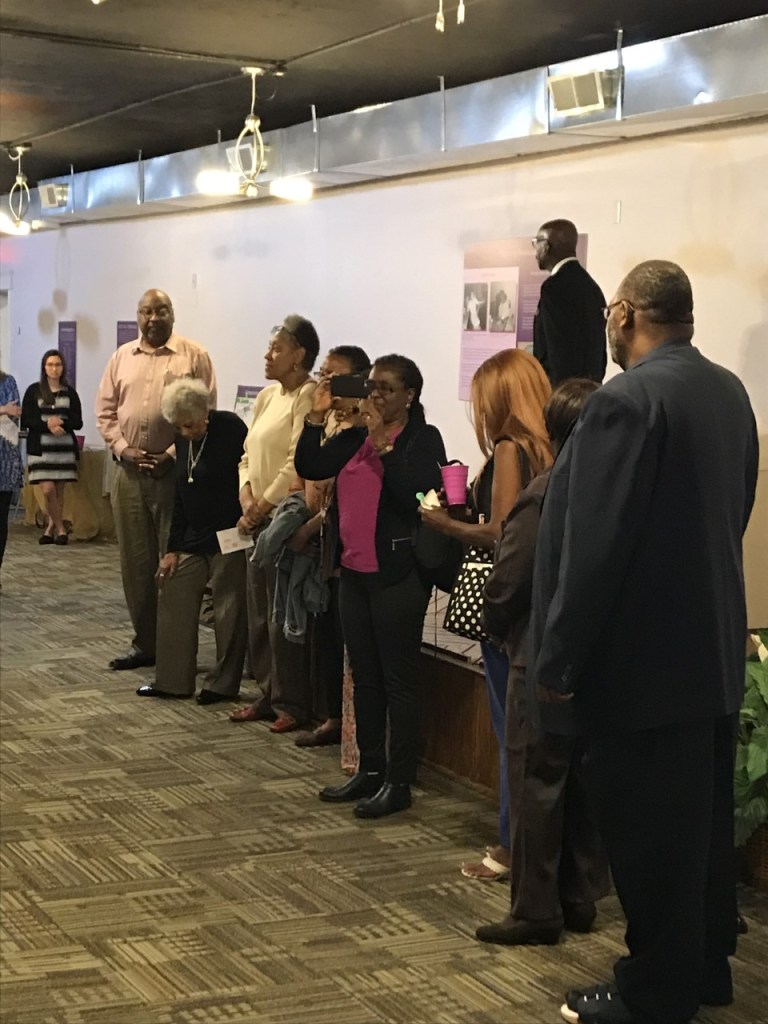
Our guest speakers and their families at the “Still We Thrive” exhibit reception at The Griot. Photo courtesy of author.

Facebook is a great way for museums to engage with the public and promote conversation. In their article Managing Social Media, Doing Public History, authors Max Farley, Krista Pollett, ans Brian Whetstone describe an example of this: a 2019 social media campaign pertaining to the ratification of the 19th Amendment which granted American women the right to vote. The National Historic Landmarks Program’s (NHLP) Facebook page highlighted the story of Zitkala-Ša, a Yankton Dakota Sioux woman who fought for Native American women’s voting rights, as the 19th Amendment didn’t include them. Most Facebook users who responded to the posts had never heard of Zitkala-Ša, as Native American history is so underrepresented in the primary and secondary school curriculum. I see this all the time in the classes I teach: students have no idea about the tragedies Native peoples faced during colonization and their struggles today. The efforts of the NHLP team led to much-needed discussion on topics such as Native American assimilation, boarding schools, the U.S. Constitution, and citizenship rights.

Authors Farley, Pollett, and Whetstone encourage public historians to use social media and not to be afraid of posting on “difficult” or controversial history. They refer to social media as “one of the greatest tools for the public historian.” We can make sure everyone’s voices and perspectives are heard and shared easily with others. It can be a great teaching tool, to fill in the gaps of the one-sided views of American history most of us receive in school. Facebook is also a way of building and sharing new history with others, and reaching larger audiences than would ever be possible before the digital age.

March 31 Discussion Blog: Bautista Part 1

Hi all! Here is our virtual discussion prompt this week. I’ll post discussion questions throughout and at the end that will be in bold text.

Susana Smith Bautista explains in her 2013 book Museums in the Digital Age: Changing Meanings of Place, Community, and Culture that digital technology affects every aspect of our modern lives. While most modern essays and articles focus on how technology can provide new opportunities for museums and completely change how they operate, Bautista believes that we shouldn’t rush to change everything about the traditional museum. We must consider how a museum’s online or global community relates to its physical or local community, and all interactions between the two. Culture and technology are intertwined; both adapting and changing the way museums work as important sociocultural institutions.

Today, museums are experiencing a shift into the digital age. Bautista explains that four major constructs are interlinked: place, technology, community, and culture. She suggests important questions for discussion: if museums are cultural institutions, how much should they reflect society’s values and concerns? Should they reflect what’s important to the upper classes or to the lower classes? Which cultures, races, or ethnic groups should be represented? These are not easily answered by modern museums, and may unfortunately depend on where the funding is coming from. In the past, only elite culture was stressed, but in a modern diverse world, most museum curators and staff would agree that multiple voices need to be represented, especially minority groups that have been historically underrepresented.

Bautista analyzes five different case studies of U.S. museums that she considers to be forerunners in using innovative technologies, both onsite and online. She focuses on art museums because she believes that they are more likely to encourage and sustain discussion on issues involving authenticity, contemplation, discourse, expertise, creativity, and authority. Personally, I believe that any type of museum could foster such discussion, as I am covering all of these topics in my research on authenticity and meaning in Northwest Coast traditional wood carvings. What do you all think? We will discuss three of her chosen museums: the Indianapolis Museum of Art, the Walker Art Center, and the San Francisco Museum of Modern Art. For each museum, Baustista evaluated them in relation to their physical space, how they used social media to engage online communities, website strategies, how they use technology onsite, and staff attitudes towards technology and museum goals.

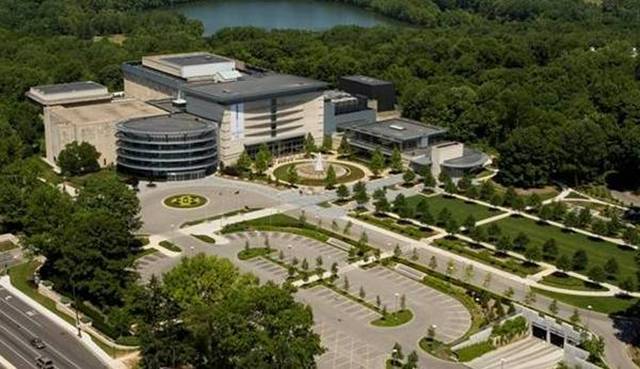
Indianapolis Museum of Art. Photo courtesy of Wikimedia commons.

Bautista describes the Indianapolis Museum of Art (IMA) in Indiana as a top museum in the state, with a growing international presence. The museum campus consists of the 26-acre historic Oldfields-Lilly House and Gardens, surrounding gardens, the Newfield residence, the Playhouse recreation building with swimming pools and a tennis court, four pavilions, and a 100-acre nature park. 2010 records show that 428,213 guests came through the museum buildings, but thousands more likely visited the grounds due to the free admission and parking, thanks to support from corporations and wealthy donors. Extensive public programs including meditation hikes, guided walks, and arts fairs draw large crowds. In 2013 when Bautista’s book was published, the IMA website drew large numbers (nearly one million visitors) to its virtual exhibitions, which tended to focus more on drawing in a global community rather than a local one. Bautista describes tags integrated into a collections search based on descriptive words that online visitors used to describe images. There was a “tag cloud” page where the more popular the word, the larger it would appear. Viewers could log in to post comments and add their own tags to works featured on the website. The Tag Tours feature grouped together art under certain tags such as WTF? and LOL Catz, which seems like a fun way to encourage online visitor participation. Unfortunately, these and other features Bautista mentions no longer exist in 2020. If you visit the website today, the site is rather boring in comparison to what it used to be. A collections search revealed only basic information and images, which seems unfortunate. IMA utilizes social media such as Facebook to target a local audience with posted onsite events and posts art news on Twitter to appeal to a more international audience. ArtBabble, developed initially by the IMA, is still accessible as a video-sharing website. In the museum buildings today, digital comment screens are placed at the ends of special exhibitions and visitors may access guided tours on their smartphones.

Spoonbridge and Cherry sculpture, Walker Art Center. Photo courtesy of Meet Minneapolis.

The Walker Art Center (WAC) in Minneapolis receives generous support from local foundations and large corporations. Its iconic Spoonbridge and Cherry piece in the sculpture garden is used to promote the city and the museum in advertisements. The garden is an important outdoor community space, hosting exhibitions, concerts, and performances. Staff are dedicated to promoting multivocality and encouraging diverse visitor perspectives and interpretations. Civic engagement and hands-on learning experiences are the focus here. Large lounge areas between galleries and an interactive Info Lounge for shared digital experiences create spaces for visitors to interact with each other and with digital technologies. Director Olga Viso states that WAC caters first to the local community, then to the global contemporary art world and online. WAC is one of the first art museums to develop programs specifically for teenagers including exhibitions, poetry slams, internships, and workshops. The Teen Art Council website hosts blogs, online artworks, a Facebook group, and an events calendar. The Mn Artists free online artists’ community is run by WAC and funded by a local foundation. It features artworks, forums, blogs, links to social media, and other features to connect and promote local artists. In 2010, the 50/50: Audience and Experts Curate the Paper Collection exhibit featured both works chosen by the curator and by the public. Visitors, both online and via a museum kiosk, could vote on which artworks they wished to see in the exhibit. Such exhibits play important roles in encouraging visitor participation.

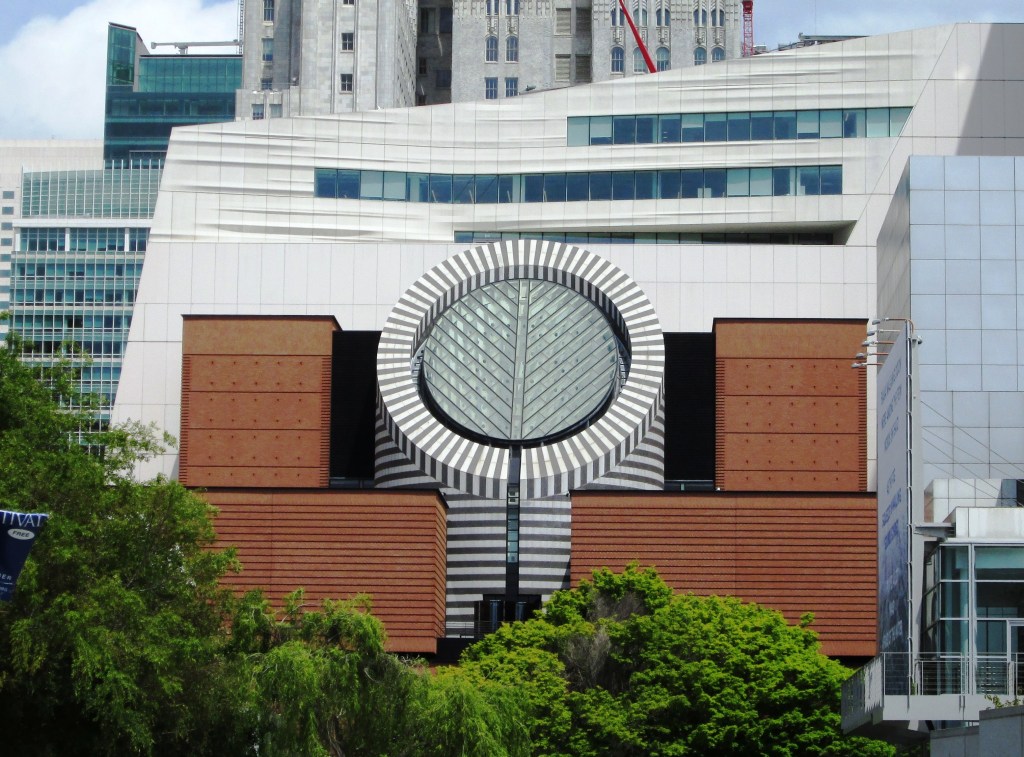
San Francisco’s Museum of Modern Art. Photo courtesy of Wikimedia commons.

The San Francisco Museum of Modern Art (SFMoMA) serves an affluent region highly committed to community and culture. Since its earliest exhibitions in the 1930s, curators focused both on international and local artists. A 2016 renovation created 137,500 feet of gallery space and 40,000 feet of free public space, surpassing MoMA in New York. Despite creating so much space for community, admission is high: $18 for adults, $12 for seniors, and $11 for students. Such prices may deter lower-income visitors. Two spaces at the museum, the Learning Lounges and Koret Visitor Education Center, bridge the gap between physical and online spaces by providing smart tables, interactive kiosks, reading spaces, a separate children’s area and library, and digital tours visitors can access with their smartphones. Young people can participate in treasure hunt activities, taking photos of certain works on their smartphones and uploading them to Flickr. SFMoMA is very active on social media, especially Twitter. ArtThink, a resource for teachers, was developed in 2006 to provide hands-on and online activities for students from grade 4 through college. A major exhibition that served as a platform for digital technology was 2001’s Points of Departure: Connecting with Contemporary Art. Touch-screen tables, interactive kiosks, and handheld PDA tours won the museum a Gold MUSE award in 2002 for best integration of new technologies into a gallery space. ArtScope, created in 2008, featured thumbnail images of 6,050 objects from the museum’s permanent collection arranged in a map-like grid that online visitors could utilize instead of a conventional collections search. Unfortunately, this feature is no longer available. However, the museum’s blog Open Space is still active as a community forum for the San Francisco arts community.

Using Bautista’s evaluation criteria:

How does each museum use physical space? How do they use social media to engage online communities? What are their website strategies? How do they use technology onsite? What are staff attitudes towards technology and museum goals?

Urban “Renewal,” Racism, and Community in St. Louis

City Hospital #2, 2945 Lawton Avenue, 1920, Missouri History Museum, N27531.jpg
A 1920 photograph of City Hospital No. 2 at 2945 Lawton Avenue, one of many important buildings destroyed in the guise of progress. (Courtesy of the Missouri History Museum.) https://www.stlmag.com/history/architecture/centers-of-community-that-were-destroyed-in-the-mill-creek-v/

In Washington University’s publication Visualizing Urban History: St. Louis’ Mill Creek Valley, Professor Margaret Garb describes Mill Creek Valley as “St. Louis’s most famous forgotten neighborhood” (p. 3). Originally built as an elite neighborhood, Mill Creek was developed from the 1850s to the 1870s with Victorian mansions and brick apartment buildings. The neighborhood covered 465 acres from Grand Avenue to 20th and Olive in the north, to the railroad tracks in the south. In the 1880s, most residents were white, middle-class homeowners. By the early 1900s, increasing industrialization prompted many remaining homeowners, especially widows, to open their homes to renters in order to increase their income.

Beginning in the 1920s, a large influx of African-American workers from the rural South transformed Mill Creek into a predominantly African-American neighborhood. According to Garb, racial segregation meant that African Americans were restricted to certain areas of the city, as white homeowners attached restrictive covenants to property titles which banned selling or renting houses to certain minorities (p. 10). Knowing that African Americans had few housing options, landlords could raise rents while cutting back on maintenance. By the 1950s, many housing units were in dire need of repairs.

Detail of Advertisement of People's Finance Corporation by George E. Stevens in History of Central Baptist Church, 1927, Missouri History Museum, LibAcc-2009-0923.jpg
Detail of a 1920s advertisement for People’s Finance Corporation, taken from a history of Central Baptist Church by George E. Stevens. (Courtesy of the Missouri History Museum.)

Despite all of these challenges, Mill Creek was still a vibrant community with shops, churches, and businesses serving St. Louis’ African-American residents. John A. Wright’s Discovering African American St. Louis: A Guide to Historic Sites explains the significance of many of these places, in Mill Creek and its surrounding communities. For example, the Booker T. Washington Theatre (1912-1930) was one of the first African-American owned and operated theaters of its kind in the U.S. with a seating capacity of 1,000. The theater featured vaudeville performances, motion pictures, and live performances, including concerts by famous local singer Josephine Baker (Wright, p. 25). The People’s Bank on the first floor of The People’s Finance Corporation Building was one of the few local banks that loaned money to African-American residents. City Hospital No. 2 (pictured at top) served the African-American community, who were often denied access to other city hospitals (Wright, p. 31). Though it was demolished during urban renewal, the modern Homer G. Phillips Hospital remained an integral feature of the nearby Ville neighborhood, another important African-American community.

Garb explains that the federal Housing Acts of 1949 and 1954 provided millions in funding to demolish older “blighted” neighborhoods that were considered to be public eyesores and crime-ridden areas and replace them with modern offices and apartment buildings (p. 4). In May of 1955, city voters approved $10 million in funding to tear down Mill Creek, and the demolition began on Feb. 16, 1959 (p. 11). Mill Creek residents were displaced into new public housing or North City rowhouses. Reinvestment was slow, and hardly any of the residential redevelopments appeared. Today, what used to be a thriving African-American community is now covered by sports fields, a stadium, office buildings, and highway entrance ramps. As historic African-American neighborhoods across the country met similar fates, Mill Creek is an illustration of how racism imbedded in federal housing programs can cause devastation to minority neighborhoods. Colin Gordon’s text, Mapping Decline: St. Louis and the Fate of the American City, contains valuable insights on suburban flight and urban decline, highlighting African-American neighborhoods in the city. Gordon’s main point is that “throughout the twentieth century, private discrimination and public policy combined – intentionally and explicitly – to constrain the residential options available to African Americans, to confine them to certain wards or neighborhoods, and to stem what was widely perceived (in St. Louis and elsewhere) as the threat of “invasion” by north-to-south and rural-to-urban migration” (p. 11). The lasting effects of such discrimination can still be seen today.

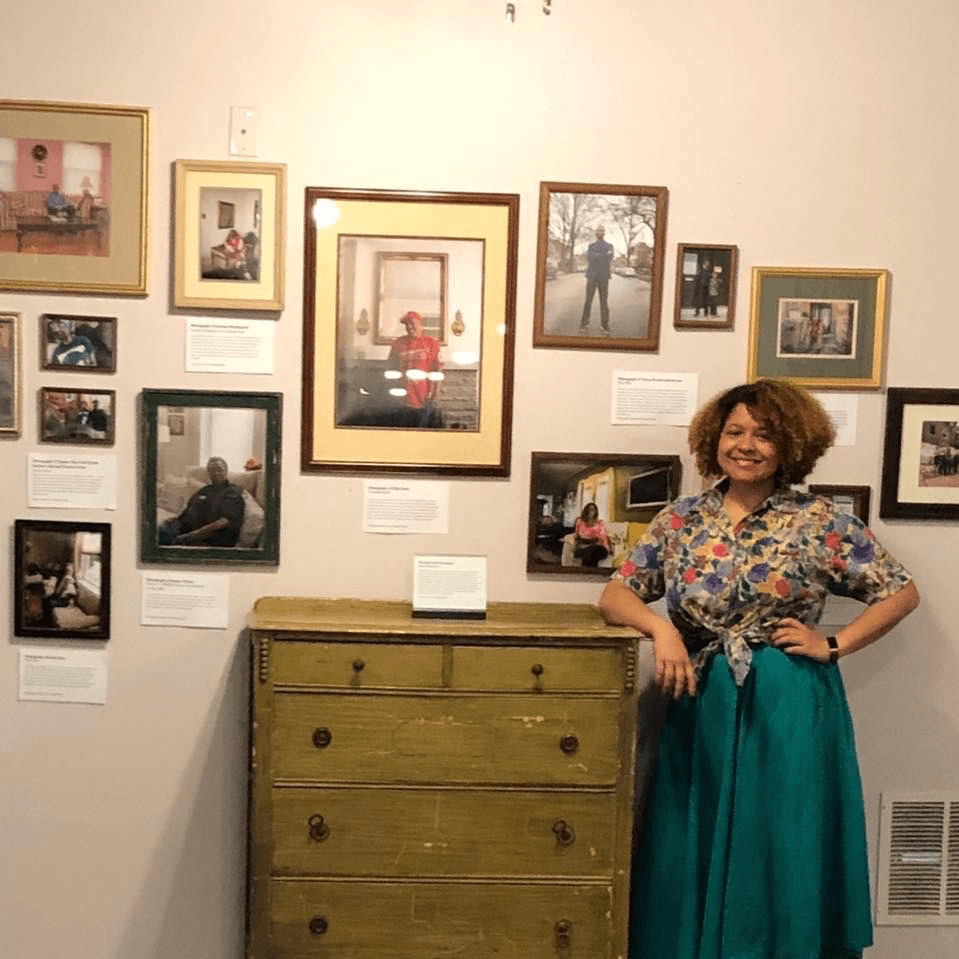
Community portraits and stories from St. Louis’ historic and thriving African-American neighborhoods. Part of our May 2019 exhibit at The Griot Museum of Black History and Culture called Still We Thrive: The Neighborhoods of Fountain Park, Lewis Place, and The Ville. (Courtesy of Natasha Sykes.)

Last spring, my classmates and I created an exhibit at the local Griot Museum of Black History and Culture featuring three historic African-American St. Louis neighborhoods: The Ville, Fountain Park, and Lewis Place. Our exhibit featured important histories of neighborhood sites and institutions, some that are still thriving today. The theme of our exhibit was “still we thrive:” despite the pressures and challenges faced by residents over the last 100 years, these communities are still there and people are still fighting to renew them. We were honored to meet with and work with community members in creating an exhibit that highlighted important buildings and businesses in their communities. One popular component of the exhibit, organized by my classmate Natasha Sykes, featured portraits and interviews of community residents. Most of us, even those of us who grew up in St. Louis, had no idea about the history of these neighborhoods or their significance when we began researching the exhibit. I can definitely state that grassroots research should be an important aspect of any community exhibit.  

Digital History Projects

For a digital history review essay, I came across this amazing digital history project: Slave Voyages Digital Memorial Project and Database. https://www.slavevoyages.org/. Created and maintained by the Emory Center for Digital Scholarship, Emory University, Atlanta, Georgia, https://www.slavevoyages.org/about/about.

Following Jeffrey W. McClurken’s guidelines in his Digital History Reviews section of the Organization of American Historians (OAH) website, this project fits the description for a “digital narrative:” something created for the Internet with digital tools as a secondary source for interpreting the past.[i] The website utilizes data collected from decades of archival research and digitized in order to make it usable and accessible for students, scholars, or anyone wishing to learn more about the Trans-Atlantic slave trade. Three databases are featured: the Trans-Atlantic Slave Trade Database includes data from over 36,000 slaving expeditions between 1514 and 1866, the Intra-American Slave Trade Database contains information on 10,000 slave voyages within the Americas, and the African Names Database provides the African names and demographic information for 91,491 Africans taken from captured slave ships and African trading sites. Users also have access to hundreds of scanned photos and documents documenting people, places, vessels and manuscripts pertaining to the Trans-Atlantic and Intra-American slave trades. Where available, each image contains a link to a corresponding voyage in the databases and a reference to the original source.[ii] Users may search for specific information about vessels, routes, and enslaved peoples associated with these voyages and are able to analyze the data and report results as statistical tables, graphs, maps, timelines, and animations.

This detailed digital history database is the result of three years of development by a multi-disciplinary team of historians, web designers, librarians, cartographers, curriculum specialists, and computer programmers working collaboratively with university scholars from Europe, Africa, South America, and North America. The National Endowment for the Humanities (NEH) was the principal sponsor of this work organized at the Emory Center for Digital Scholarship, the University of California at Irvine, the University of California at Santa Cruz, and the Hutchins Center of Harvard University.[iii] Starting in the late 1960s, Herbert S. Klein and other historians began to collect archival data on slave-trading voyages from unpublished sources and code them into a machine-readable format. Major additions to the data sets and revisions were done in the 1990s, and from 2015-2018 when the website was completely re-coded and modernized with additional funding from the NEH.[iv]

Users may select the About tab from the upper-right menu bar to discover detailed information on the project’s history, the website’s creators, and the project contributors. When visiting the website for the first time, users will notice a clean, well-organized main page featuring easy-to-see links to different areas and subheadings in bright blue. The main title “Explore the Dispersal of Enslaved Africans Across the Atlantic World” is followed by a brief statement of purpose and an invitation to use the site for the analysis of slave trade data, viewing interactive maps, timelines, and animations. Artistically, the colors, graphics, and background animation using archival photos is pleasing to the eye and encourages further investigation by students and researchers, unlike many main pages that look hastily-made and boring. The main page also features a link to a 6-minute orientation video introduced by African-American literary critic and historian Henry Louis Gates that orients first-time visitors and provides a brief history of the site.

The video includes a site walkthrough by its creators, showing viewers how to utilize the searchable databases. This orientation video is likely very effective in encouraging users to explore the site further, as it illustrates how to get the most out of the site’s features and why the information presented is significant. Navigating the site is very easy, especially after watching the short orientation video. No matter what link you select, there are tandard tabs on every page in the upper-right menu bar that link to main content areas: it’s unnecessary to backtrack or search in order to return to another area. The entire site is accessible in English, Spanish, and Portuguese through a translation selection tab in the upper-right menu bar, which is also available on every page. All links function perfectly and while there is much information, it is organized in a way that would not make it an overwhelming or daunting experience, even for an undergraduate student with little research experience.

For example, I selected the Trans-Atlantic tab from the upper-right menu bar. A list of options appears, and selecting the first option (Understanding the Database) takes the user to a three-paragraph introduction by Dr. David Eltis at Emory University on the slave trade and its significance. On the left is another list where users may discover more information on data sets, terminology, and variables. Each database lists a Nature of the Sources section where the original data sources and contributing scholars are explained in detail. Returning to the top menu, I selected the database option, and data from 36,108 slave voyage entries appears in a clear-to-read table. Using a menu on the top left, users may view tabs labeled Summary statistics, Tables, Data visualization, Timelines, and Maps for the entire data set or for certain selected categories and variables. Users may easily manipulate the data in many different ways, using the top left menu to select for certain year ranges, ships by nation, itineraries, dates, captain and crew names, outcomes, and specific data sources.

As someone who is not the most well-versed in using a database, I was easily able to select data only from British slave ships with a date range of 1514-1586. Instantly, interactive maps, a timeline, charts, tables, and other features were available for me to access based on the variables I chose. It is also easy to choose new sets of variables and begin the process over. Users may also download the data into CSV or Excel formats.  The site is definitely designed for scholars, teachers, and college-level students, but its ease of use will attract anyone who seeks information about the slave trade. Its digital tools and online databases create more opportunities for users to access and utilize the data than ever before, especially compared with printed resources. Teachers may download lesson plans aimed at grades 6-12 through the Resources tab in the upper-right menu bar. A statement in this section indicates that these resources are being updated to reflect the most current version of the database, and lists contact information should teachers need further assistance in using the site as a classroom resource.[i]

In summary, this digital history project is an incredible scholarly resource created and maintained by multinational historians and researchers, and should be a valuable resource to history teachers, students, and the interested public. The site is free and easy to access and use: no downloads are required. In terms of content, the site presents honest and factual information about the slave trade and the effects of European colonization on world history that users can see in the form of digitized archival data transferred from hundreds of years of written records. According to Dr. David Eltis’ 2018 introduction to the Trans-Atlantic Slave Trade Database, “the details of the more than 36,000 voyages presented here greatly facilitate the study of cultural, demographic, and economic change in the Atlantic world from the late sixteenth to the mid-nineteenth centuries.”[ii] The site’s creators hope that scholars around the world will utilize the databases to analyze variables and trends in a way that was not possible before. Doing so may shed new light on a dark era of history that affects us so much today.

McClurken, Jeffrey. 2020. “Digital History Reviews.” Organization of American Historians. Accessed Feb. 22, 2020. https://jah.oah.org/submit/digital-history-reviews/.

Digital History: Modern Concerns

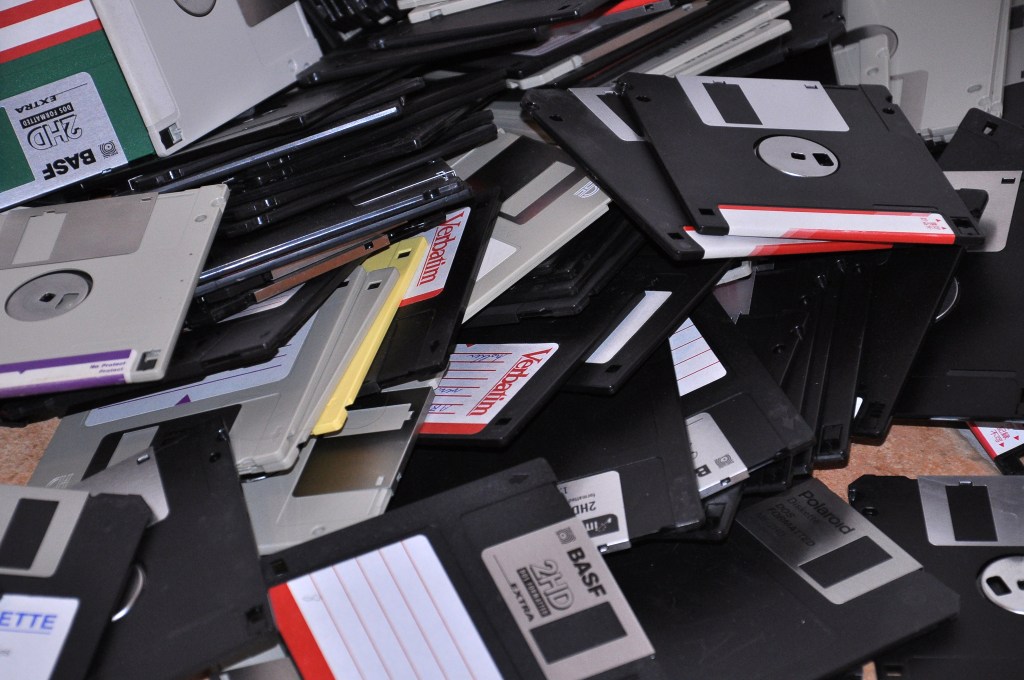
Obsolete floppy disks illustrate the changing nature of technology and digital information. (Photo by CTK via AP Images.)

On the topic of digital history: how does it fit within a larger humanities category? According to Stephen Robertson in his chapter of the 2016 volume, Debates in the Digital Humanities, the digital humanities is not a “single all-encompassing tent, but … a house with many rooms, different spaces for disciplines that are not silos but entry points and conduits to central spaces where those from different disciplines working with particular tools and media can gather” (p. 4). In this way, each discipline brings a distinctive contribution to the larger humanities field. I can definitely agree with this, as different disciplines within the humanities have a different focus, with variable methods and theories. Robertson stresses that digital history’s use of the Internet and computational tools are two areas that set it apart from other disciplines within digital humanities (p, 7). I would have to disagree with Robertson here, because every discipline I’ve ever worked in from history to botany uses the Internet and computational tools such as digital mapping, social media, and image/text analysis. Building on my previous blog, perhaps we should just consider the term “digital history” as a way of utilizing digital tools to perform the same tasks historians have always done.

In his article Scarcity or Abundance? Preserving the Past in a Digital Era, Roy Rosenzweig illustrates modern issues involving digital history. While the Internet and digital tools have created new worlds and opportunities for documenting and sharing history, if digital information only exists in cyberspace and there are no attempts to create printed records or “hard copies,” that information can completely disappear. My colleague discovered this the hard way: while doing research in China, his computer and an additional external hard drive were stolen from his hotel room. Two years of his research data was saved on those devices, and he had not printed any of it. Two years of research, just gone. Working with digital information is great, but there is no substitute for a good, old-fashioned paper copy of one’s work. In fact, I lost research when one computer smashed into the driveway during a move and another crashed. Since I had never printed anything from that project, it was all gone. Today, I back up everything into the mysterious omniscient Cloud, which is useful when your devices fail you, but could still vanish into the ether.

A main issue we face is how to possibly create printed copies of every piece of digital information and where to store it all? Rosenzweig states that “the astonishingly rapid accumulation of digital data—obvious to anyone who uses the Google search engine and gets 300,000 hits—should make us consider that future historians may face information overload” (p. 2). Since we can’t possibly print out every email, photo, and document saved online, how do we decide what to print? How do we decide which materials are worth saving? These are not simple questions to answer, as responses will differ from person to person. Everyone would likely choose to print and save the information they value most.

Another issue is format change. At the Missouri Botanical Garden’s Herbarium, all of the digital files pertaining to the maize collection were saved on 1990s floppy disks that we had no means of accessing. Since digital tools and technology change over time and they change incredibly quickly, yesterday’s technology may not be accessible by future researchers. Rosenzweig mentions this issue, and recommends saving older devices just in case we need to use them to access information in out-of-date formats like floppy disks (p. 7). Hence, print out everything on acid-free paper or save that old computer with the floppy disk drive! It’s definitely worth the time. I wish someone had thought of that back in the 1990s.

Defining Digital Humanities

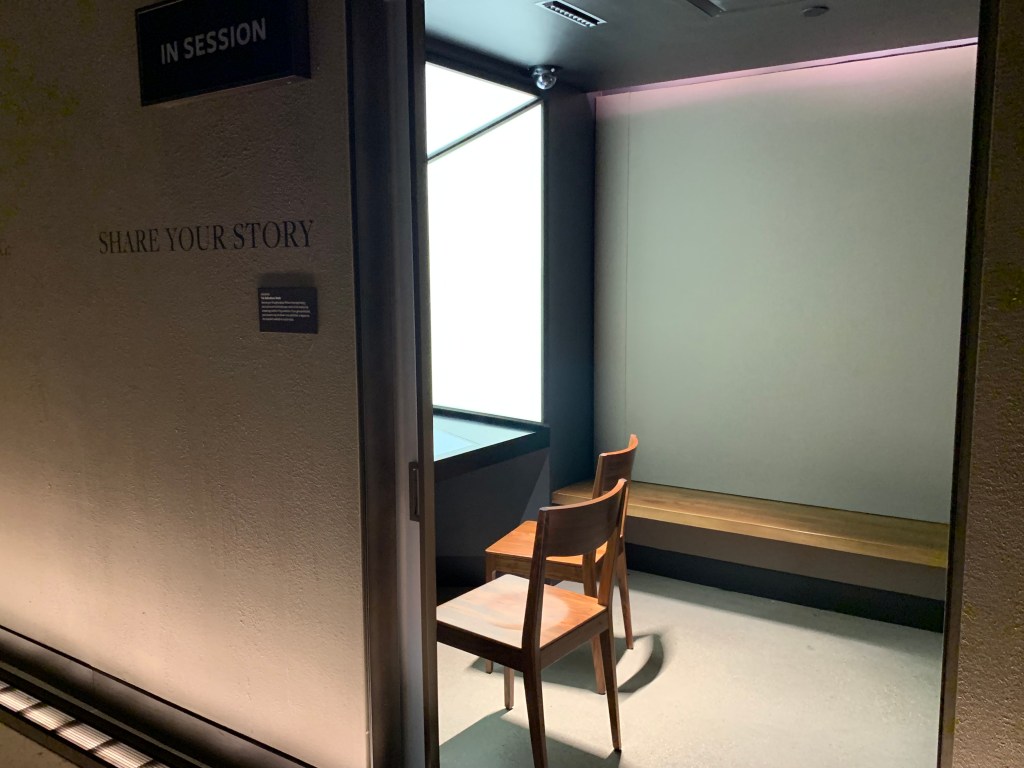
Visitors at the National Museum of African American History and Culture in D.C. have the opportunity to record oral histories that will be saved digitally and can be viewed/shared online. (Photo taken by author, June 2019). https://www.si.edu/museums/african-american-museum

How do we define the term “digital humanities?” Dave Parry writes in Chapter 24 of Debates in the Digital Humanities that establishing a clear definition is a difficult task. However, when describing their work, ‘digital humanists’ can be understood as scholars who use “digital devices to perform critical and theoretical observations that are not possible with traditional pencil or typewriter aided analysis” (p. 8). Digital tools, including computers, provide a new lens for theoretical and critical textual analysis. We can use computers for more elaborate projects, analyze more data, and present visualizations that were not possible before the digital age. Parry stresses that using computers and digital tools for humanities research does not alter the “values and ideals of the field” in any way: it simply means that we can do our work more quickly, more efficiently, and on a larger scale than ever before (p. 11).

In Parry’s view, there are two ‘digital humanisms:’ one where digital tools such as computers are applied to the traditional means of humanities research, and another where these ‘new media’ digital tools (social media, digital games, etc.) are studied on their own terms (p. 17). While many conservative scholars might prefer the first approach, I believe that social media and digital games can provide valuable information and insight, as they are utilized by so many people in all age groups and walks of life. One of Parry’s revelations is that “we live in a world that is so thoroughly digital it is impossible, at this point, to talk about the nondigital” (p. 24). We live in a world of text messages, Instagram influencers, Canvas courses, and digitized books. Most research involves digital information: it has affected all aspects of human culture. Whether we view “the humanities” and “the digital” as separate or as inseparable, it cannot be denied that the discipline has changed.

Eileen Gardiner and Ronald G. Musto explain in their text, The Digital Humanities: A Primer for Students and Scholars, that we have used the same tools in the humanities for hundreds of years. Rhetoric and grammar are the tools we use in constructing texts, along with material tools such as pen, ink, and paper. Gardiner and Musto stress that although the main focus is still on the analysis of traditional texts and documents, scholars need to convert these into digital form in order to create data for modern analysis (p. 72). They list various text-based tools such as Microsoft Word and PDF documents for textual analysis and annotation, conversion and decoding, editing and processing, mining, recognition, visualization, and transcription.

Data-based tools include Database Management Systems (DBMS) and mapping tools for collecting and managing digital data. Image/sound-based tools for image creation, editing, and processing include software such as Photoshop, 3D-modeling and printing, along with video and audio processing tools. According to Gardiner and Musto, outcome-based tools such as blogging, brainstorming, collaboration, communication, organization, publication and sharing, peer reviewing, and searching (Google, etc.) depend on the scholar’s goals.

I have utilized many of these tools in my own research, and am continuously learning how to use new tools for analysis. Looking at how technology has changed scholarly research, even over the last twenty years, is incredible. Although some may resist, we must embrace these new tools, learn how to utilize them, and take our research to new heights in this new age of humanities research.