On the topic of digital history: how does it fit within a larger humanities category? According to Stephen Robertson in his chapter of the 2016 volume, Debates in the Digital Humanities, the digital humanities is not a “single all-encompassing tent, but … a house with many rooms, different spaces for disciplines that are not silos but entry points and conduits to central spaces where those from different disciplines working with particular tools and media can gather” (p. 4). In this way, each discipline brings a distinctive contribution to the larger humanities field. I can definitely agree with this, as different disciplines within the humanities have a different focus, with variable methods and theories. Robertson stresses that digital history’s use of the Internet and computational tools are two areas that set it apart from other disciplines within digital humanities (p, 7). I would have to disagree with Robertson here, because every discipline I’ve ever worked in from history to botany uses the Internet and computational tools such as digital mapping, social media, and image/text analysis. Building on my previous blog, perhaps we should just consider the term “digital history” as a way of utilizing digital tools to perform the same tasks historians have always done.
In his article Scarcity or Abundance? Preserving the Past in a Digital Era, Roy Rosenzweig illustrates modern issues involving digital history. While the Internet and digital tools have created new worlds and opportunities for documenting and sharing history, if digital information only exists in cyberspace and there are no attempts to create printed records or “hard copies,” that information can completely disappear. My colleague discovered this the hard way: while doing research in China, his computer and an additional external hard drive were stolen from his hotel room. Two years of his research data was saved on those devices, and he had not printed any of it. Two years of research, just gone. Working with digital information is great, but there is no substitute for a good, old-fashioned paper copy of one’s work. In fact, I lost research when one computer smashed into the driveway during a move and another crashed. Since I had never printed anything from that project, it was all gone. Today, I back up everything into the mysterious omniscient Cloud, which is useful when your devices fail you, but could still vanish into the ether.
A main issue we face is how to possibly create printed copies of every piece of digital information and where to store it all? Rosenzweig states that “the astonishingly rapid accumulation of digital data—obvious to anyone who uses the Google search engine and gets 300,000 hits—should make us consider that future historians may face information overload” (p. 2). Since we can’t possibly print out every email, photo, and document saved online, how do we decide what to print? How do we decide which materials are worth saving? These are not simple questions to answer, as responses will differ from person to person. Everyone would likely choose to print and save the information they value most.
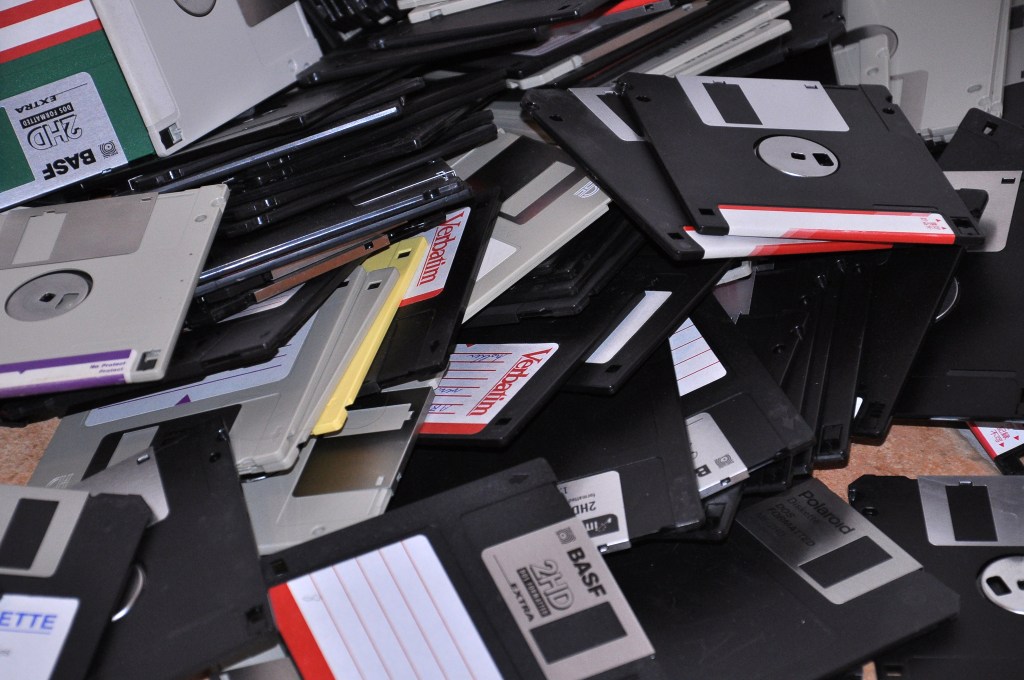
Another issue is format change. At the Missouri Botanical Garden’s Herbarium, all of the digital files pertaining to the maize collection were saved on 1990s floppy disks that we had no means of accessing. Since digital tools and technology change over time and they change incredibly quickly, yesterday’s technology may not be accessible by future researchers. Rosenzweig mentions this issue, and recommends saving older devices just in case we need to use them to access information in out-of-date formats like floppy disks (p. 7). Hence, print out everything on acid-free paper or save that old computer with the floppy disk drive! It’s definitely worth the time. I wish someone had thought of that back in the 1990s.
 Taryn's Museum Studies Blog