
In Washington University’s publication Visualizing Urban History: St. Louis’ Mill Creek Valley, Professor Margaret Garb describes Mill Creek Valley as “St. Louis’s most famous forgotten neighborhood” (p. 3). Originally built as an elite neighborhood, Mill Creek was developed from the 1850s to the 1870s with Victorian mansions and brick apartment buildings. The neighborhood covered 465 acres from Grand Avenue to 20th and Olive in the north, to the railroad tracks in the south. In the 1880s, most residents were white, middle-class homeowners. By the early 1900s, increasing industrialization prompted many remaining homeowners, especially widows, to open their homes to renters in order to increase their income.
Beginning in the 1920s, a large influx of African-American workers from the rural South transformed Mill Creek into a predominantly African-American neighborhood. According to Garb, racial segregation meant that African Americans were restricted to certain areas of the city, as white homeowners attached restrictive covenants to property titles which banned selling or renting houses to certain minorities (p. 10). Knowing that African Americans had few housing options, landlords could raise rents while cutting back on maintenance. By the 1950s, many housing units were in dire need of repairs.

Despite all of these challenges, Mill Creek was still a vibrant community with shops, churches, and businesses serving St. Louis’ African-American residents. John A. Wright’s Discovering African American St. Louis: A Guide to Historic Sites explains the significance of many of these places, in Mill Creek and its surrounding communities. For example, the Booker T. Washington Theatre (1912-1930) was one of the first African-American owned and operated theaters of its kind in the U.S. with a seating capacity of 1,000. The theater featured vaudeville performances, motion pictures, and live performances, including concerts by famous local singer Josephine Baker (Wright, p. 25). The People’s Bank on the first floor of The People’s Finance Corporation Building was one of the few local banks that loaned money to African-American residents. City Hospital No. 2 (pictured at top) served the African-American community, who were often denied access to other city hospitals (Wright, p. 31). Though it was demolished during urban renewal, the modern Homer G. Phillips Hospital remained an integral feature of the nearby Ville neighborhood, another important African-American community.
Garb explains that the federal Housing Acts of 1949 and 1954 provided millions in funding to demolish older “blighted” neighborhoods that were considered to be public eyesores and crime-ridden areas and replace them with modern offices and apartment buildings (p. 4). In May of 1955, city voters approved $10 million in funding to tear down Mill Creek, and the demolition began on Feb. 16, 1959 (p. 11). Mill Creek residents were displaced into new public housing or North City rowhouses. Reinvestment was slow, and hardly any of the residential redevelopments appeared. Today, what used to be a thriving African-American community is now covered by sports fields, a stadium, office buildings, and highway entrance ramps. As historic African-American neighborhoods across the country met similar fates, Mill Creek is an illustration of how racism imbedded in federal housing programs can cause devastation to minority neighborhoods. Colin Gordon’s text, Mapping Decline: St. Louis and the Fate of the American City, contains valuable insights on suburban flight and urban decline, highlighting African-American neighborhoods in the city. Gordon’s main point is that “throughout the twentieth century, private discrimination and public policy combined – intentionally and explicitly – to constrain the residential options available to African Americans, to confine them to certain wards or neighborhoods, and to stem what was widely perceived (in St. Louis and elsewhere) as the threat of “invasion” by north-to-south and rural-to-urban migration” (p. 11). The lasting effects of such discrimination can still be seen today.
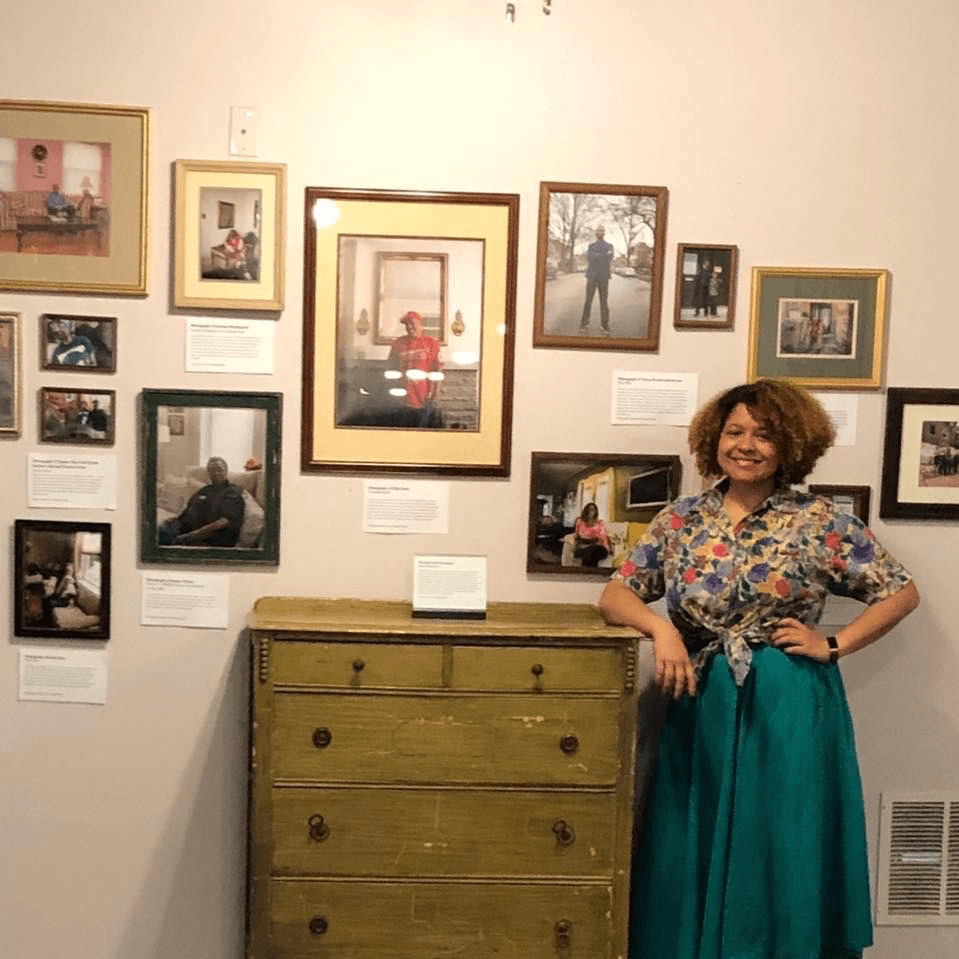
Last spring, my classmates and I created an exhibit at the local Griot Museum of Black History and Culture featuring three historic African-American St. Louis neighborhoods: The Ville, Fountain Park, and Lewis Place. Our exhibit featured important histories of neighborhood sites and institutions, some that are still thriving today. The theme of our exhibit was “still we thrive:” despite the pressures and challenges faced by residents over the last 100 years, these communities are still there and people are still fighting to renew them. We were honored to meet with and work with community members in creating an exhibit that highlighted important buildings and businesses in their communities. One popular component of the exhibit, organized by my classmate Natasha Sykes, featured portraits and interviews of community residents. Most of us, even those of us who grew up in St. Louis, had no idea about the history of these neighborhoods or their significance when we began researching the exhibit. I can definitely state that grassroots research should be an important aspect of any community exhibit.
 Taryn's Museum Studies Blog