Hi all! Here is our virtual discussion prompt this week. I’ll post discussion questions throughout and at the end that will be in bold text.
Susana Smith Bautista explains in her 2013 book Museums in the Digital Age: Changing Meanings of Place, Community, and Culture that digital technology affects every aspect of our modern lives. While most modern essays and articles focus on how technology can provide new opportunities for museums and completely change how they operate, Bautista believes that we shouldn’t rush to change everything about the traditional museum. We must consider how a museum’s online or global community relates to its physical or local community, and all interactions between the two. Culture and technology are intertwined; both adapting and changing the way museums work as important sociocultural institutions.
Today, museums are experiencing a shift into the digital age. Bautista explains that four major constructs are interlinked: place, technology, community, and culture. She suggests important questions for discussion: if museums are cultural institutions, how much should they reflect society’s values and concerns? Should they reflect what’s important to the upper classes or to the lower classes? Which cultures, races, or ethnic groups should be represented? These are not easily answered by modern museums, and may unfortunately depend on where the funding is coming from. In the past, only elite culture was stressed, but in a modern diverse world, most museum curators and staff would agree that multiple voices need to be represented, especially minority groups that have been historically underrepresented.
Bautista analyzes five different case studies of U.S. museums that she considers to be forerunners in using innovative technologies, both onsite and online. She focuses on art museums because she believes that they are more likely to encourage and sustain discussion on issues involving authenticity, contemplation, discourse, expertise, creativity, and authority. Personally, I believe that any type of museum could foster such discussion, as I am covering all of these topics in my research on authenticity and meaning in Northwest Coast traditional wood carvings. What do you all think? We will discuss three of her chosen museums: the Indianapolis Museum of Art, the Walker Art Center, and the San Francisco Museum of Modern Art. For each museum, Baustista evaluated them in relation to their physical space, how they used social media to engage online communities, website strategies, how they use technology onsite, and staff attitudes towards technology and museum goals.

Bautista describes the Indianapolis Museum of Art (IMA) in Indiana as a top museum in the state, with a growing international presence. The museum campus consists of the 26-acre historic Oldfields-Lilly House and Gardens, surrounding gardens, the Newfield residence, the Playhouse recreation building with swimming pools and a tennis court, four pavilions, and a 100-acre nature park. 2010 records show that 428,213 guests came through the museum buildings, but thousands more likely visited the grounds due to the free admission and parking, thanks to support from corporations and wealthy donors. Extensive public programs including meditation hikes, guided walks, and arts fairs draw large crowds. In 2013 when Bautista’s book was published, the IMA website drew large numbers (nearly one million visitors) to its virtual exhibitions, which tended to focus more on drawing in a global community rather than a local one. Bautista describes tags integrated into a collections search based on descriptive words that online visitors used to describe images. There was a “tag cloud” page where the more popular the word, the larger it would appear. Viewers could log in to post comments and add their own tags to works featured on the website. The Tag Tours feature grouped together art under certain tags such as WTF? and LOL Catz, which seems like a fun way to encourage online visitor participation. Unfortunately, these and other features Bautista mentions no longer exist in 2020. If you visit the website today, the site is rather boring in comparison to what it used to be. A collections search revealed only basic information and images, which seems unfortunate. IMA utilizes social media such as Facebook to target a local audience with posted onsite events and posts art news on Twitter to appeal to a more international audience. ArtBabble, developed initially by the IMA, is still accessible as a video-sharing website. In the museum buildings today, digital comment screens are placed at the ends of special exhibitions and visitors may access guided tours on their smartphones.

The Walker Art Center (WAC) in Minneapolis receives generous support from local foundations and large corporations. Its iconic Spoonbridge and Cherry piece in the sculpture garden is used to promote the city and the museum in advertisements. The garden is an important outdoor community space, hosting exhibitions, concerts, and performances. Staff are dedicated to promoting multivocality and encouraging diverse visitor perspectives and interpretations. Civic engagement and hands-on learning experiences are the focus here. Large lounge areas between galleries and an interactive Info Lounge for shared digital experiences create spaces for visitors to interact with each other and with digital technologies. Director Olga Viso states that WAC caters first to the local community, then to the global contemporary art world and online. WAC is one of the first art museums to develop programs specifically for teenagers including exhibitions, poetry slams, internships, and workshops. The Teen Art Council website hosts blogs, online artworks, a Facebook group, and an events calendar. The Mn Artists free online artists’ community is run by WAC and funded by a local foundation. It features artworks, forums, blogs, links to social media, and other features to connect and promote local artists. In 2010, the 50/50: Audience and Experts Curate the Paper Collection exhibit featured both works chosen by the curator and by the public. Visitors, both online and via a museum kiosk, could vote on which artworks they wished to see in the exhibit. Such exhibits play important roles in encouraging visitor participation.
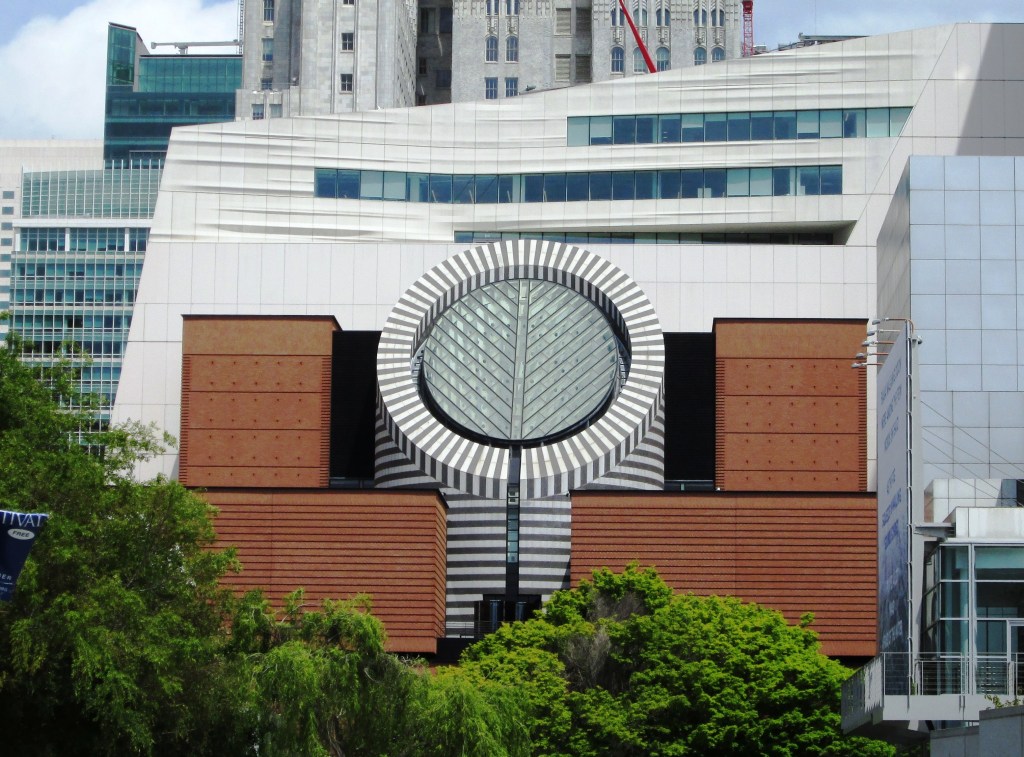
The San Francisco Museum of Modern Art (SFMoMA) serves an affluent region highly committed to community and culture. Since its earliest exhibitions in the 1930s, curators focused both on international and local artists. A 2016 renovation created 137,500 feet of gallery space and 40,000 feet of free public space, surpassing MoMA in New York. Despite creating so much space for community, admission is high: $18 for adults, $12 for seniors, and $11 for students. Such prices may deter lower-income visitors. Two spaces at the museum, the Learning Lounges and Koret Visitor Education Center, bridge the gap between physical and online spaces by providing smart tables, interactive kiosks, reading spaces, a separate children’s area and library, and digital tours visitors can access with their smartphones. Young people can participate in treasure hunt activities, taking photos of certain works on their smartphones and uploading them to Flickr. SFMoMA is very active on social media, especially Twitter. ArtThink, a resource for teachers, was developed in 2006 to provide hands-on and online activities for students from grade 4 through college. A major exhibition that served as a platform for digital technology was 2001’s Points of Departure: Connecting with Contemporary Art. Touch-screen tables, interactive kiosks, and handheld PDA tours won the museum a Gold MUSE award in 2002 for best integration of new technologies into a gallery space. ArtScope, created in 2008, featured thumbnail images of 6,050 objects from the museum’s permanent collection arranged in a map-like grid that online visitors could utilize instead of a conventional collections search. Unfortunately, this feature is no longer available. However, the museum’s blog Open Space is still active as a community forum for the San Francisco arts community.
Using Bautista’s evaluation criteria:
How does each museum use physical space? How do they use social media to engage online communities? What are their website strategies? How do they use technology onsite? What are staff attitudes towards technology and museum goals?
 Taryn's Museum Studies Blog
In response to Bautista’s question about how museums should reflect cultural values and concerns, I agree that curators are increasingly working to represent more diverse audiences in museums. This prompt brought to mind the changes happening in museum collections regarding Native American artifacts. As museums rightfully repatriate these artifacts, their collections may become less culturally diverse. One way that museums can work to represent multiple voices without the artifacts could be to create exhibits specifically about these repatriation efforts, interviewing individuals representing both the museum and the groups receiving the artifacts. This could make an interesting joint digital exhibit project or oral history project.
LikeLiked by 1 person
Hi Allison,
Great ideas on creating exhibits on repatriation! You are right, as efforts continue, the focus may have to shift from the objects themselves to the issues surrounding them. I am a huge supporter of bring multivocality into museums, especially with underepresented groups who have not traditionally had a voice.
LikeLike
When I entered the public history field in 2017 as a young, naive intern at a small museum in South County St. Louis, I didn’t pay much mind to who would be represented. It’s been through continual internships and UMSL public history courses that it has become front and center. Even if a museum’s content centers around one particular group of people (working class people at the tenement museum, African Americans at the National Civil Rights Museum in Memphis, etc) there are lessons to be taken away for everyone. In those two examples, the larger, universal ideas of community, equality, struggle, oppression, etc can be understood by all and therefore a dialogue can be created. However, as we learned in Dr. Hurley’s class when reading Taking Possession, a museum cannot ignore its immediate community. Museums should address their community, and build a dialogue for all its visitors around its content.
I’m not sure that what questions a museum brings up in the scope of its content necessarily determine how effectively it can use digital tools. When we look a the World Chess Hall of Fame, I think we’d all agree that museum has a limited breadth of subject matter. However! We saw how they ingeniously integrated digital tools into the museum.
I think its a shame that the IMA has removed those interactive aspects such as the Tag Tours. I’d be interested in further studying why those disappeared, perhaps a change in leadership. Museums should not limit their digital footprint or how they develop online content, but they do need to curate (no pun intended) how much space it takes up in the museums. Museums are moving to more open format, flowing exhibit layouts. Too many kiosks that crowd galleries leave visitors feeling frustrated. But if that same content can be found through a QR code, or a social media tag, now people can engage with the content how they please.
LikeLiked by 1 person
Hi Ben,
You are right! Museums should create a dialogue with the communities they serve. Many people still see museums as these “temples of high culture” where they don’t belong. Older, impressive architectural works (like SLAM) are inspired by Classical architecture and look like actual churches or temples because the old idea was to “uplift the uneducated masses into high culture.” Bautista speaks about this, and my earlier classes have discussed it. Encouraging underepresented groups to visit museums can be a difficult task, but a worthy one. Unfortunately, I know many curators who are not comfortable interacting with the public or learning additional perspectives on history. We need to be more willing to get out into the community through outreach and local town hall meetings.
Agreed about the Chess Hall of Fame: I wasn’t interested in chess, but I was after our tour! Technology implemented in an appealing way and trained museum staff can draw visitors in and find that connection. I am also disappointed that some of the neat digital features we read about in the text are no longer available, and would like to know why. I’d think they would draw more young people in, which would be an ideal thing.
LikeLike
Something that really stuck out to me was the unique ways that the museums utilized their online space. For example, the Indianapolis Museum of Art made their online experience very different from their physical experience because management (the director? Can’t remember) understood the audiences to be different. The people who visited in person were more likely going to be local people, while online visitors were more likely to going to be national or international visitors. Because the audiences are different, and their methods of experiencing the museum are different, the website experience had to be different from the physical museum experience. I’d be worried about that, though, for the very reason discussed in the book: people who visit the website, but then visit the physical museum, might be disappointed by the difference.
LikeLiked by 1 person
I also thought this was an interesting decision that the museum management made. While I do agree that a museum’s website can reach a much wider audience, it can’t be discounted that the website is often the first thing that visitors to the physical museum will see when looking up the museum. In this sense, museum websites need to give a sample of what the physical museum experience will be like, at least on the homepage or on a “Visit the Museum” page. I don’t think it’s necessarily a bad thing for the website experience to be different from the museum experience, but it can’t be so different that it’s difficult to see how the two connect.
LikeLiked by 1 person
Very true! Museums can’t assume that their in-person and online visitors will always be from different audiences and looking for alternate experiences. I like Allison’s idea of having a “Visit the Museum” tab on the main page.
LikeLike
I’ve found lately that the question “who should museums cater to?” is far more complicated than I initially believed. While, in theory, museums should apply to everyone, no matter their social or economic status, that is never the case. It is my belief that this is due to many early museums focusing on students of higher education and the more academically inclined visitor. But this isn’t the purpose of museums these days. So, why are we still trying to appease the upper class citizens of society by ignoring the narratives of the overlooked? In short, museums are still businesses and are subjected to the restrictions placed upon us by those who are either uncomfortable with certain topics or simply wish to ignore them.
However, we are getting better, as Allison mentioned above. Repatriation is one of the first steps to becoming more inclusive and telling the stories that have been forgotten or pushed down. Now the struggle is shifting towards how to express these narratives without offending anyone.
LikeLike
Hi Elizabeth,
You have some great points! Unfortunately, it is usually impossible to avoid offending everyone, but we can do our best to try and include every perspective possible in museum exhibits, both online and in physical museum spaces. Exploring tough issues and unpleasant historical themes can be difficult, but museums like the National Museum of the American Indian (NMAI) and the National Museum of African American History & Culture (NMAAHC) do a fantastic job of educating visitors on controversial topics. Repatriation is also tricky, as many museums still don’t have detailed or accessible inventories of human remains and funerary objects due to lack of funding.
LikeLike
Like others have said, I also believe that it is up to the museum to serve their audience and use that as a motivation for how they reflect society. I have seen many times where museums have decided to showcase certain ideals, classes, and interests that don’t appeal to their audience. This often leads to an unsuccessful museum due to the fact that they are not serving their audience.
However, I do think social media opens up a new way to appeal to new audiences through ways that may not be successful in a physical format. MoMA, for example, uses different techniques in its physical exhibitions and their digital elements in order to appeal to their wide range in audience.
LikeLike
Great post, Taylour!
I agree: museums don’t always create exhibits that serve their audience, due to curator bias or what donors wish to see. I can recall a huge collection of potato mashers that Peter Wyse Jackson really wanted displayed at the Sach’s Museum…It’s very important to know your audience, and I think that more and more museums are engaging visitors online in order to evaluate their preferences and interests.
LikeLike