Sarah Elwood and Katharyne Mitchell write in their article Technology, Memory, and Collective Knowing that “social and spatial media, especially interactive online and mobile applications, play an increasing role in everyday lives in many parts of the world, demonstrably altering space, time, memory, and collective knowledge.” I have definitely seen this to be true in my own life! I remember when I first created my Facebook account, back in 2008. It was amazing. I could post digital photos, track down my high school friends and see what they were up to, and reconnect with my grad school classmates. We were able to share photos and posts, making up for lost time. My cousin April, who I hadn’t seen in 15 years, tracked me down and shared some childhood photos of us with our grandmother. Her brother and our other cousin Brady were able to access the photos, and we could all comment on them instantly. What a wonderful way to share family history! My friend Beth and I would sit up all night and play interactive games on Facebook, and we felt connected despite the fact that she was sitting at her computer in New Mexico, with me in St. Louis. With my first iPhone in 2012, I discovered the Facebook mobile app, and it has been the primary way I interact with friends and family ever since. When I was traveling and working in Belize and Mexico in 2012, I was able to post photos as I traveled, instantly sharing them with friends back home. Like Elwood and Mitchell, I now see Facebook as a massive digital history project! Through my timeline, I can actually go back and see what I was doing or thinking years ago.

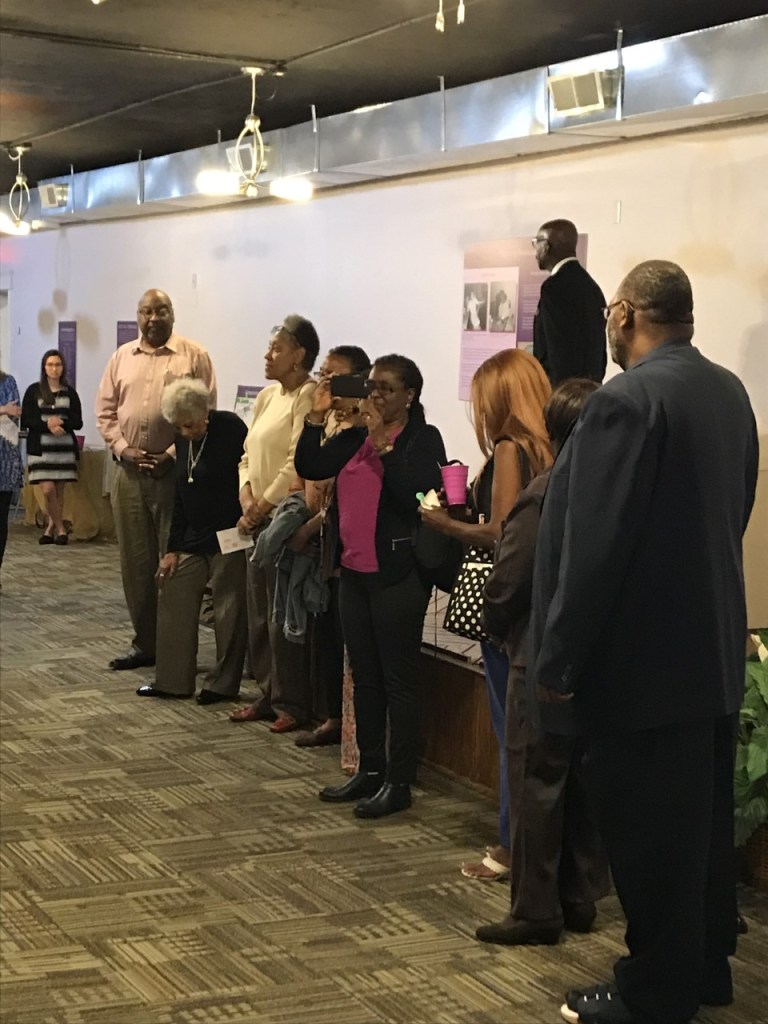
Since Facebook is so popular, it is a great way to advertise cultural events. Last May, my Practicum course at the University of Missouri, St. Louis created an exhibit called Still We Thrive: The Neighborhoods of Fountain Park, Lewis Place, and The Ville and hosted a reception at The Griot Museum of Black History and Culture in St. Louis. I organized the reception, and located three guest speakers to introduce the exhibit. We advertised on Facebook through The Griot’s website and our individual profiles, and were able to attract 50 guests for our reception within a few days. Not only did we save time, but if we had distributed flyers door to door, we would have reached a much smaller audience.
Facebook is a great way for museums to engage with the public and promote conversation. In their article Managing Social Media, Doing Public History, authors Max Farley, Krista Pollett, ans Brian Whetstone describe an example of this: a 2019 social media campaign pertaining to the ratification of the 19th Amendment which granted American women the right to vote. The National Historic Landmarks Program’s (NHLP) Facebook page highlighted the story of Zitkala-Ša, a Yankton Dakota Sioux woman who fought for Native American women’s voting rights, as the 19th Amendment didn’t include them. Most Facebook users who responded to the posts had never heard of Zitkala-Ša, as Native American history is so underrepresented in the primary and secondary school curriculum. I see this all the time in the classes I teach: students have no idea about the tragedies Native peoples faced during colonization and their struggles today. The efforts of the NHLP team led to much-needed discussion on topics such as Native American assimilation, boarding schools, the U.S. Constitution, and citizenship rights.
Authors Farley, Pollett, and Whetstone encourage public historians to use social media and not to be afraid of posting on “difficult” or controversial history. They refer to social media as “one of the greatest tools for the public historian.” We can make sure everyone’s voices and perspectives are heard and shared easily with others. It can be a great teaching tool, to fill in the gaps of the one-sided views of American history most of us receive in school. Facebook is also a way of building and sharing new history with others, and reaching larger audiences than would ever be possible before the digital age.
 Taryn's Museum Studies Blog