This semester was definitely the most difficult one I’ve ever faced, and I’m sure that many other students feel the same way. My graduate course and internship, along with the courses I taught, were all switched to an online format in a very short period of time. Now, more than ever, I appreciate the modern digital tools and technologies that got me through this crisis. Through online platforms like Canvas and Blackboard, I was able to deliver course content and communicate with my students. Through email, I was able to communicate with my mentor and professor. Utilizing digital library databases and Google Scholar, I was able to locate sources for my term papers. We are lucky that this pandemic occurred during the digital age, as it was still possible for us to learn, teach, and communicate effectively.
My Museums and Public History in the Digital Age graduate course was particularly relevant, as museums have only been accessible online since mid-March. As they slowly reopen, visitor numbers will likely not be as high as they were pre-pandemic. Learning how to post in the Clio digital history platform was very interesting, as it helped us to to explore local landmarks important to St. Louis history. Created by David Trowbridge of Marshall University, the Clio website and mobile app are free, and use GPS to share local knowledge about historic and cultural sites around the U.S. Individuals and educational institutions contributed to Clio’s 30,000+ entries and over 200 walking tours across the country featuring historical and cultural landmarks, monuments, and museums. Each entry contains a short introduction to the site and its history, with images, media, and links where visitors can find more information. We also learned how social media can be a powerful tool in encouraging conversation and promoting public history.
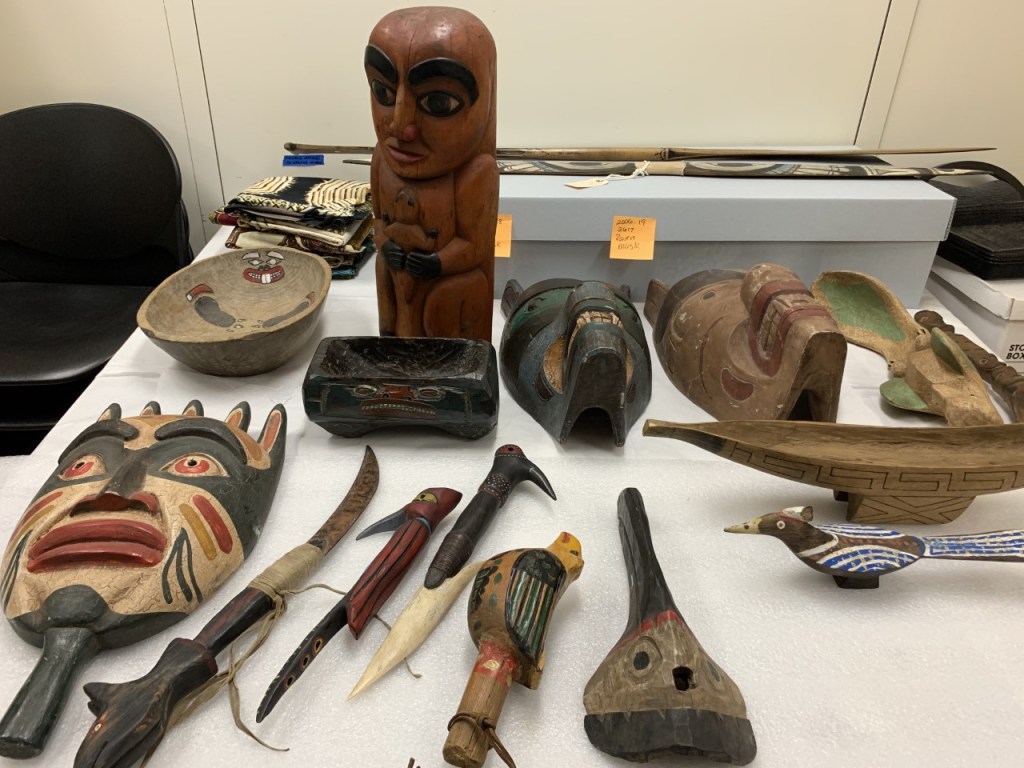
While I have not learned the ins and outs of Omeka yet, I look forward to creating an Omeka site for my project through the Southern Illinois University at Edwardsville’s University Museum. All semester, I have worked to update Excel spreadsheets and transcribe digital video interviews for the Voices in Wood project, which will feature 57 wooden bowls, masks, and other cultural items from the museum’s collection along with the perspectives of three project consultants. Visitors to the digital exhibit will be able to explore the items and contrasting ideas on their authenticity, use, age, and cultural affiliation. Our two First Nations consultants generally believed that the items were authentic Native-made pieces from the Pacific Northwest Coast, but our guest museum curator consultant believed that most of the items were fakes made in Asia from tropical wood. I will hopefully present a paper on our findings in November at the American Anthropological Association’s (AAA) annual meeting in St. Louis.
In summary, I have learned that digital tools are a necessary part of the public historian’s and museum specialist’s toolkit. When people cannot visit a museum in person, a digital experience must suffice. As museum professionals, we must do our best to learn digital tools and implement them in our work, making exhibits and information more accessible online than ever before. This fall, I will be teaching online and in hybrid format, and will need to learn how to utilize new digital resources in my classes. I am thankful that we have the technology to help students, including myself, continue learning in a rather insane age.
 Taryn's Museum Studies Blog